
Infectious causes of Cancer: Bacteria, Virus and Parasites
Cancer itself is not a virus or bacterium, but some infections raise cancer risk. See which viruses, bacteria, and parasites are linked to cancer, and how they do it.

On this page
Is cancer a virus or a bacterium? No. Cancer is not an infection you can catch. Cancer is the uncontrolled growth of the body's own cells. However, some infections can raise the risk of certain cancers by damaging cells over time. So the correct picture is this: cancer itself is not a germ, but certain viruses, bacteria, and parasites can trigger the changes that lead to cancer.
Infectious agents are responsible for roughly 15 to 20 percent of cancers worldwide, a share that is higher in low- and middle-income countries. This makes them one of the most important, and most preventable, causes of cancer. Some, like the bacterium Helicobacter pylori and the human papillomavirus (HPV), account for a large share of cancers globally.
This article lists the viral, bacterial, and parasitic agents linked to cancer, explains briefly how they cause it, and summarizes them in one table.
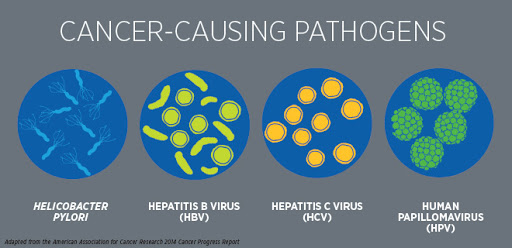 Figure: Viruses, bacteria, and parasites linked to human cancers.
How do infections cause cancer?

An infection almost never turns into cancer quickly or in most people. Cancer develops in only a minority of infected people, usually after many years of chronic infection. Infectious agents raise cancer risk in three main ways:
- Direct genetic damage. Some viruses insert their own genes into the host cell or produce proteins that switch off the cell's natural brakes on growth. When the genes that normally control cell division or repair damage are disabled, cells can start to grow uncontrollably. HPV and its E6 and E7 proteins, which block key tumor-suppressor proteins, are the classic example.
- Chronic inflammation. Long-term infection keeps a tissue inflamed for years. Constant cycles of cell damage and repair increase the chance of a cancer-causing mutation. This is how Helicobacter pylori in the stomach and the liver flukes in the bile ducts drive cancer, and it contributes to liver cancer from hepatitis B and C.
- Weakening the immune system. Some infections suppress immunity, which lets other cancer-causing viruses go unchecked. HIV works this way. It does not cause cancer directly, but by weakening immune defenses it allows viruses like HHV-8 and EBV to trigger cancers they otherwise could not.
The key idea: the infection is usually the first step in a long chain, not an instant cause. This is also why prevention works. Removing the infection (or preventing it with a vaccine) can prevent the cancer.
Infectious agents linked to cancer
| Agent | Type | Linked cancer | Main mechanism |
|---|---|---|---|
| Human papillomavirus (HPV) | Virus (DNA) | Cervical, anal, penile, oropharyngeal | Viral oncoproteins (E6/E7) disable tumor suppressors |
| Hepatitis B virus (HBV) | Virus (DNA) | Liver (hepatocellular carcinoma) | Chronic inflammation; genome integration |
| Hepatitis C virus (HCV) | Virus (RNA) | Liver (hepatocellular carcinoma) | Chronic inflammation |
| Epstein-Barr virus (EBV) | Virus (DNA) | Burkitt and Hodgkin lymphoma, nasopharyngeal carcinoma | Transforms B cells; drives proliferation |
| Human herpesvirus 8 (HHV-8 / KSHV) | Virus (DNA) | Kaposi sarcoma | Viral oncogenes; worse with immunosuppression |
| Human T-lymphotropic virus 1 (HTLV-1) | Virus (RNA) | Adult T-cell leukemia/lymphoma | Viral proteins drive T-cell proliferation |
| Merkel cell polyomavirus (MCPyV) | Virus (DNA) | Merkel cell carcinoma (skin) | Viral oncoproteins; genome integration |
| Human immunodeficiency virus (HIV) | Virus (RNA) | Kaposi sarcoma, lymphomas, cervical (indirect) | Immunosuppression (does not cause cancer directly) |
| Helicobacter pylori | Bacterium | Stomach cancer, gastric MALT lymphoma | Chronic inflammation of stomach lining |
| Schistosoma haematobium | Parasite (fluke) | Bladder cancer | Chronic inflammation from eggs in bladder |
| Opisthorchis viverrini | Parasite (fluke) | Bile duct cancer (cholangiocarcinoma) | Chronic inflammation of bile ducts |
| Clonorchis sinensis | Parasite (fluke) | Bile duct cancer (cholangiocarcinoma) | Chronic inflammation of bile ducts |
Viruses that cause cancer
Seven viruses are consistently recognized as causes of human cancer: HPV, hepatitis B and C, EBV, HHV-8, HTLV-1, and Merkel cell polyomavirus. Together, oncogenic viruses cause a large share of infection-related cancers, with HPV alone responsible for nearly half of virus-linked cancer cases.
- Hepatitis B virus (HBV) and hepatitis C virus (HCV) are associated with liver cancer (hepatocellular carcinoma)
- Epstein-Barr virus (EBV) is associated with lymphoma and nasopharyngeal cancer. EBV is the primary cause of infectious mononucleosis but EBV is also a causative agent in many aggressive neoplasms, including 20% of cases of Hodgkin’s lymphoma (one of the most common lymphomas of adolescence), nasopharyngeal carcinoma, and a subtype of Burkitt’s lymphoma.
- Human papillomavirus (HPV) is a major cause of cervical, anal, penile, and oropharyngeal cancer. The most common clinically significant manifestation of persistent genital HPV infection is cervical intraepithelial neoplasia (CIN). HPV-16 and HPV-18 are implicated as the cause of nearly 70% of Carcinoma of the cervix. See more: Human Papillomavirus (HPV): Warts, Cervical Cancer, and the Vaccine
- Human herpesvirus 8 (HHV-8) is the causative agent of Kaposi’s sarcoma.
- Human immunodeficiency virus (HIV): HIV does not cause cancer directly but HIV infection increases a person’s risk of getting several types of cancer such as Kaposi’s sarcoma, invasive cervical cancer, non-Hodgkin lymphoma, and central nervous system lymphoma, etc.
- Human T-lymphotropic virus-1 (HTLV-1): HTLV-1 has been linked with a type of lymphocytic leukemia and non-Hodgkin lymphoma called adult T-cell leukemia/lymphoma (ATL).
- Merkel cell polyomavirus (MCPyV) is the cause of most cases of Merkel cell carcinoma, an aggressive skin cancer. It was one of the more recently discovered human cancer viruses.
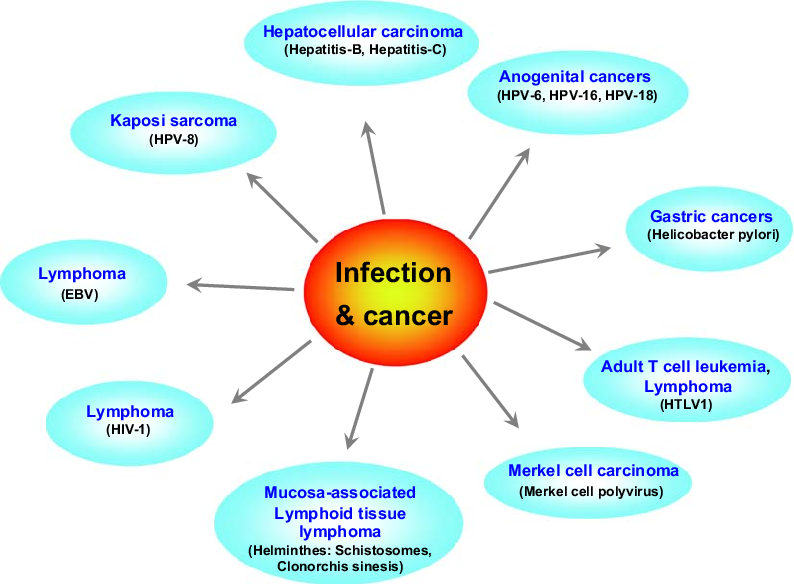 Figure: Various cancers have been linked to infection
Bacteria that cause cancer
Only one bacterium is a well-established cause of human cancer, but it is a major one. Chronic infection with Helicobacter pylori is the single largest infectious cause of cancer worldwide by number of cases. It predisposes to stomach cancer and to gastric mucosa-associated lymphoid tissue (MALT) lymphoma, by keeping the stomach lining inflamed for years. Treating the infection can reduce this risk, which is why H. pylori is considered an important preventable cause of cancer.
Parasites that cause cancer
Three parasitic flatworms (flukes) are recognized causes of cancer, mainly in the regions where they are common:
- Schistosoma haematobium is linked to bladder cancer. Its eggs lodge in the bladder wall and cause long-term inflammation. It is common in parts of Africa and the Middle East.
- Opisthorchis viverrini and Clonorchis sinensis are liver flukes linked to cancer of the bile ducts (cholangiocarcinoma). They are acquired from eating raw or undercooked freshwater fish and are common in parts of Southeast and East Asia.
How to Remember
Cancer is not a germ, but germs can start it: you cannot "catch" cancer like a cold. What you can catch is an infection that, years later, may trigger cancer. Infection is the match, not the fire.
The three routes ("break it, burn it, or blind the guard"): infections cause cancer by directly breaking the cell's growth-control genes (HPV), by burning the tissue with chronic inflammation (H. pylori, flukes, hepatitis), or by blinding the immune guard so other viruses run wild (HIV).
The two biggest culprits ("a bug and a wart virus"): by case numbers, the two largest infectious causes of cancer worldwide are a bacterium (Helicobacter pylori, stomach cancer) and a virus (HPV, cervical and other cancers). Both are preventable, one by treatment, one by vaccine.
Flukes and their targets ("blood fluke to bladder, liver fluke to bile duct"): Schistosoma haematobium (a blood fluke) goes to the bladder; Opisthorchis and Clonorchis (liver flukes) go to the bile ducts. Match the worm's home to the cancer's site.
Key exam facts
| Fact | Detail |
|---|---|
| Is cancer an infection? | No. Cancer is uncontrolled growth of the body's own cells |
| Share of cancers from infection | About 15 to 20 percent worldwide (higher in low-income regions) |
| Largest infectious cause (by cases) | Helicobacter pylori (stomach cancer) |
| Largest viral cause | HPV (cervical and other cancers) |
| Seven human oncoviruses | HPV, HBV, HCV, EBV, HHV-8, HTLV-1, MCPyV |
| Three mechanisms | Direct genetic damage, chronic inflammation, immunosuppression |
| HPV mechanism | E6 and E7 proteins disable tumor suppressors |
| HPV-16 and HPV-18 | Cause nearly 70% of cervical carcinoma |
| HIV and cancer | Indirect only (immunosuppression), not a direct cause |
| Bacterial cause | Helicobacter pylori → stomach cancer, gastric MALT lymphoma |
| Parasitic causes | Schistosoma haematobium (bladder); Opisthorchis, Clonorchis (bile duct) |
| Preventable how | Vaccines (HPV, HBV), treating infection (H. pylori, HCV) |
Where Students Get Confused
"Is cancer a virus or a bacterium?" Neither. Cancer is the uncontrolled growth of a person's own cells, not a germ. You cannot catch cancer from someone. What can be caught is an infection that, over years, raises the risk of certain cancers. This is the single most common misunderstanding about cancer and infection.
"If I get HPV or hepatitis B, will I get cancer?" Almost certainly not. Cancer develops in only a small minority of infected people, and usually only after many years of persistent infection. Most HPV infections, for example, clear on their own. The infection raises risk; it does not guarantee cancer.
"Is HPV a virus, a bacterium, or a parasite?" HPV is a virus (human papillomavirus). This confusion is common because it is grouped with bacteria and parasites as an "infectious cause of cancer," but the three are completely different kinds of organism.
"Does HIV cause cancer?" Not directly. HIV weakens the immune system, which then allows other cancer-causing viruses (like HHV-8 and EBV) to trigger cancers the body would normally control. The cancer risk from HIV is real but indirect.
"How can a stomach bug cause cancer?" Helicobacter pylori lives in the stomach and causes long-term inflammation of its lining. Years of this inflammation, with repeated cell damage and repair, increase the chance of a cancer-causing mutation. It is the leading infectious cause of cancer worldwide by case count.
"Can these cancers be prevented?" Often, yes, which is what makes infectious causes so important. Vaccines prevent HPV and hepatitis B infection (and therefore the cancers they cause), and treating H. pylori or hepatitis C can lower risk. Prevention of the infection is prevention of the cancer.
Frequently Asked Questions
Is cancer a virus or a bacterium?
Is cancer a virus or a bacterium?
Neither. Cancer is the uncontrolled growth of the body's own cells, not a germ you can catch. However, some viruses, bacteria, and parasites can raise the risk of certain cancers.
Can you catch cancer from another person?
Can you catch cancer from another person?
No. Cancer itself is not contagious. What can spread from person to person is an infection (such as HPV or hepatitis B) that may, over many years, increase the risk of cancer in the infected person.
What percentage of cancers are caused by infections?
What percentage of cancers are caused by infections?
About 15 to 20 percent of cancers worldwide are linked to infectious agents. The proportion is higher in low- and middle-income countries.
Which infection causes the most cancer?
Which infection causes the most cancer?
By number of cases, the bacterium Helicobacter pylori (a cause of stomach cancer) is the single largest infectious cause of cancer worldwide, followed closely by the human papillomavirus (HPV).
Is HPV a virus, a bacterium, or a parasite?
Is HPV a virus, a bacterium, or a parasite?
HPV is a virus. It is the human papillomavirus, and it is the main cause of cervical cancer and several other cancers.
How do infections cause cancer?
How do infections cause cancer?
In three main ways: by directly damaging the genes that control cell growth, by causing years of chronic inflammation, or by weakening the immune system so other cancer-causing viruses can act.
Can infection-related cancers be prevented?
Can infection-related cancers be prevented?
Often, yes. Vaccines prevent HPV and hepatitis B infection, and treating infections like Helicobacter pylori or hepatitis C can lower cancer risk. This makes infectious causes among the most preventable.
Does HIV cause cancer?
Does HIV cause cancer?
Not directly. HIV weakens the immune system, which allows other viruses to cause cancers such as Kaposi sarcoma and certain lymphomas.
References
- de Martel, C., Georges, D., Bray, F., Ferlay, J., & Clifford, G. M. (2020). Global burden of cancers attributable to infections in 2018: a worldwide incidence analysis. The Lancet Global Health, 8(2), e180–e190. https://doi.org/10.1016/S2214-109X(19)30488-7
- American Cancer Society. (2024). Viruses that can lead to cancer. https://www.cancer.org/cancer/cancer-causes/infectious-agents/infections-that-can-lead-to-cancer/viruses.html
- American Cancer Society. (2024). Bacteria that can lead to cancer. https://www.cancer.org/cancer/cancer-causes/infectious-agents/infections-that-can-lead-to-cancer/bacteria.html
- American Cancer Society. (2024). Parasites that can lead to cancer. https://www.cancer.org/cancer/cancer-causes/infectious-agents/infections-that-can-lead-to-cancer/parasites.html
- Krump, N. A., & You, J. (2018). Molecular mechanisms of viral oncogenesis in humans. Nature Reviews Microbiology, 16(11), 684–698. https://doi.org/10.1038/s41579-018-0064-6

Tankeshwar Acharya, MSc (Medical Microbiology)
Tankeshwar Acharya is an Assistant Professor in the Department of Microbiology at Patan Academy of Health Sciences (PAHS), Nepal, where he has been teaching and practicing clinical microbiology for over 14 years. He is the founder of Microbe Online, one of the leading free microbiology education resources on the web, covering bacteriology, mycology, parasitology, immunology, and clinical laboratory diagnostics written from direct experience in both the classroom and the diagnostic laboratory.
Comments
No comments yet. Be the first to share your thoughts.
Leave a comment
All comments are reviewed before they appear.