
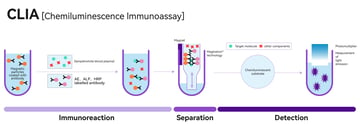
Chemiluminescence Immunoassay (CLIA): Principle, Procedure, and Interpretation
How chemiluminescence immunoassay (CLIA) works, how it differs from ELISA and RIA, and how to read the result, including the cutoff index and why CLIA is more sensitive.
How chemiluminescence immunoassay (CLIA) works, how it differs from ELISA and RIA, and how to read the result, including the cutoff index and why CLIA is more sensitive.
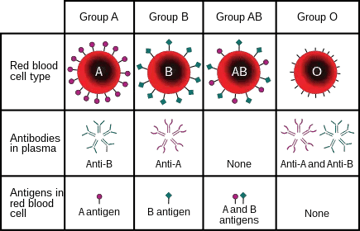
How ABO and Rh blood grouping works: forward (cell) versus reverse (serum) typing, why the two must agree, the Bombay phenotype trap, and how agglutination gives the result. Proced...

How pregnancy tests detect hCG: the inverted logic of agglutination inhibition where no clumping means pregnant, why modern kits target the hCG beta subunit, and what causes false...
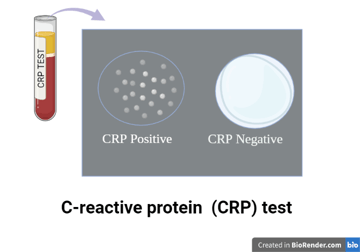
CRP is a key hospital marker of inflammation. Learn how CRP is measured, how to read a result in mg/L, hs-CRP for heart risk, CRP versus ESR, and what a negative result does not ru...
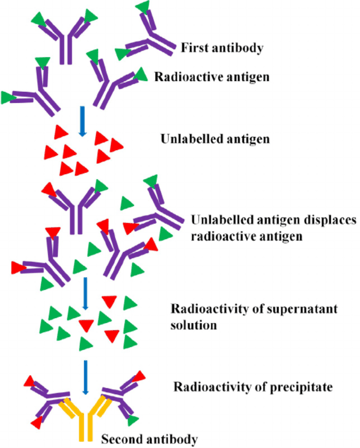
How radioimmunoassay measures tiny amounts of antigen: labeled and unlabeled antigen compete for limited antibody, so the radioactive signal falls as the sample's antigen rises. Pr...
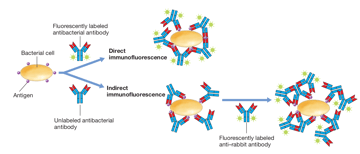
How the indirect fluorescent antibody (IFA) test uses two antibodies to detect antibodies in patient serum (and antigens in cells). Principle, procedure, syphilis example, and why...
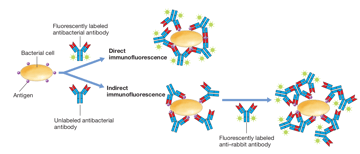
How the direct fluorescent antibody (DFA) test detects antigen directly in a specimen using one labeled antibody. Principle, step-by-step procedure, apple-green result, and the key...

Antigen detection tests identify pathogen proteins directly in blood, urine, stool, or CSF before antibodies appear. Learn the methods (ELISA, RDT, immunofluorescence, latex agglut...
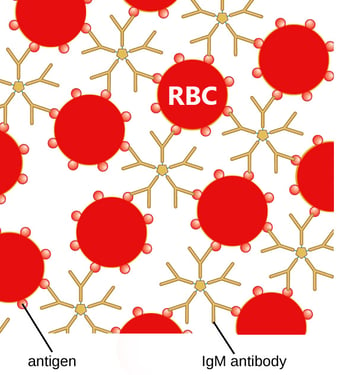
The Coombs (antiglobulin) test explained: why direct detects antibody already on the patient's red cells and indirect detects antibody in serum, what a positive DAT means (warm vs...
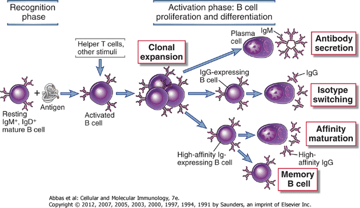
Serological tests detect antibodies or antigens in patient serum to diagnose infections. This article covers interpretation principles, seroconversion, the 9 key infections diagnos...
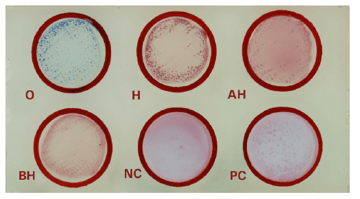
Widal test: principle, slide and tube procedure, result interpretation, diagnostic titers by region, false positives, limitations, and comparison with newer typhoid diagnostic test...
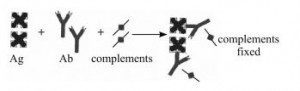
CFT explained clearly: the two-system principle, step-by-step procedure, and the key point students get wrong, why no hemolysis means a positive result.
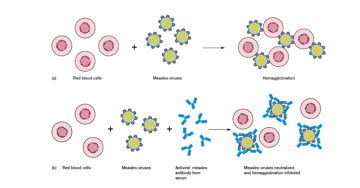
How the hemagglutination inhibition (HAI) test measures antiviral antibodies: antibody blocks the virus from agglutinating red cells, so no clumping means a positive result. Princi...
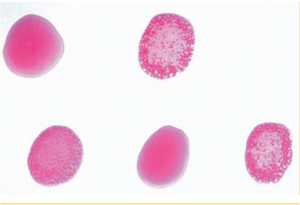
How to read and act on a Rose Bengal test for brucellosis: why the acidic pH matters, why a positive must be confirmed (especially in endemic areas), the prozone caveat, and where...