
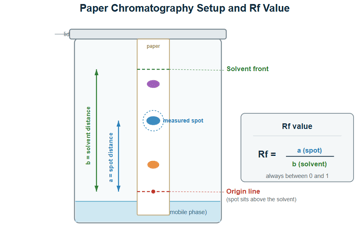
Paper Chromatography: Principle, Procedure, Types and Uses
Paper chromatography explained: its partition principle and Rf value, the types (ascending, descending, radial), step-by-step procedure, and its applications.
Articles tagged with chromatography.
Information about chromatographic techniques.
Paper chromatography explained: its partition principle and Rf value, the types (ascending, descending, radial), step-by-step procedure, and its applications.
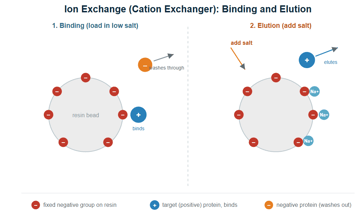
Ion-exchange chromatography explained: how it separates molecules by charge, cation vs anion exchangers, the role of pH, elution, and its applications.
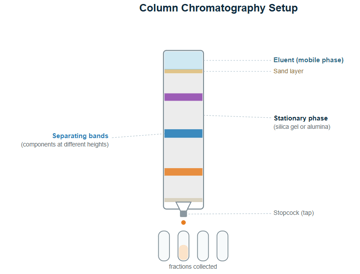
Column chromatography explained: its adsorption principle, how the packed column separates a mixture, the step-by-step procedure, types, and its applications.
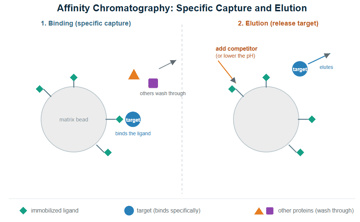
Affinity chromatography explained: how it purifies a target by specific binding to a ligand, the types (His-tag, antibody), elution, and its applications.
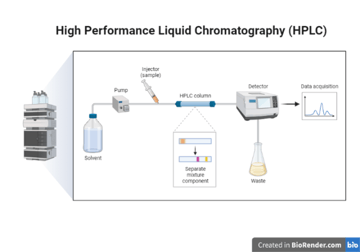
High-performance liquid chromatography (HPLC) explained: its principle, how it works under high pressure, the parts, normal vs reverse phase, and its uses.
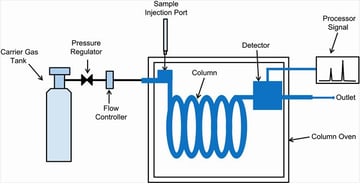
Gas chromatography (GC) explained: its principle and retention time, instrumentation and parts, detector types, GSC vs GLC, and applications, with exam notes.
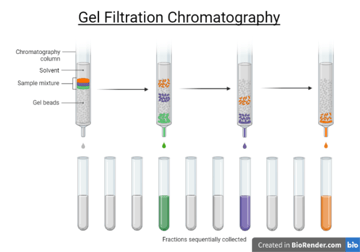
Gel filtration (size-exclusion) chromatography explained: how it separates molecules by size, why large molecules elute first, the gels used, and applications.
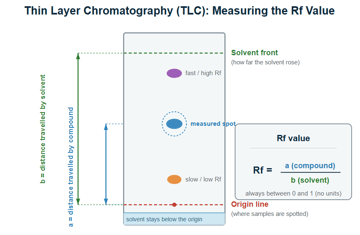
Thin layer chromatography (TLC) explained simply: its principle and Rf value, step-by-step procedure, types, adsorbents, and applications, with exam notes.
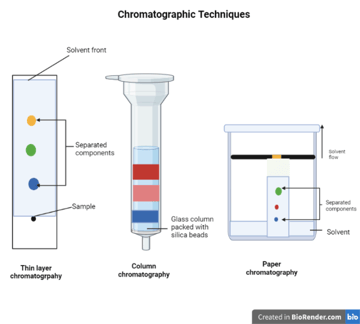
Chromatography explained: what it is, its basic principle of stationary and mobile phases, who discovered it, and the main types, with links to each technique.
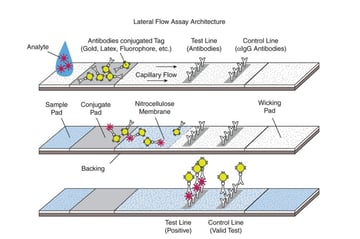
Immunochromatography (lateral flow immunoassay): how the sandwich and competitive principles work, how to read positive and negative results, and key uses.