
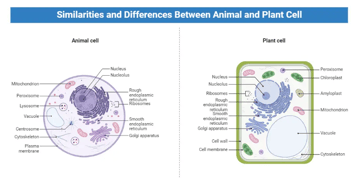
Similarities and Differences Between Plant and Animal Cells (With Diagram)
Plant and animal cells are both eukaryotic, so they share a lot. Here are their key similarities and differences, why they share them, and a clear comparison.
These articles are very basic articles, which will share general concepts in Microbiology.
Plant and animal cells are both eukaryotic, so they share a lot. Here are their key similarities and differences, why they share them, and a clear comparison.
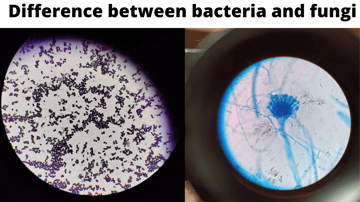
Bacteria and fungi are both microscopic, but one is a prokaryote and the other a eukaryote. Learn what actually separates them, why they share a few traits, and why an antibiotic t...
DNA and RNA differ in sugar, bases, strands, and stability. Learn not just what the differences are, but why they exist: why RNA is less stable, why DNA uses thymine, and how DNA a...
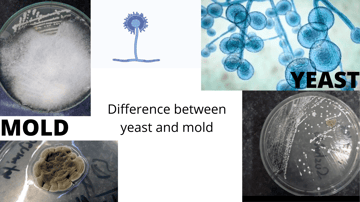
Yeast vs mold: both are fungi, so what actually separates them? Cell form, growth, lab identification, and why some fungi are both (dimorphism), explained.
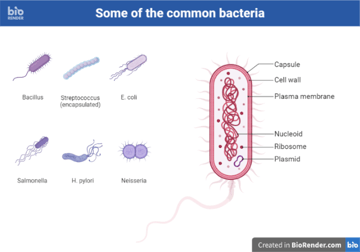
Bacteria vs viruses compared: size, structure, genome, and replication, plus what they share and whether viruses are alive. A clear side-by-side for students.
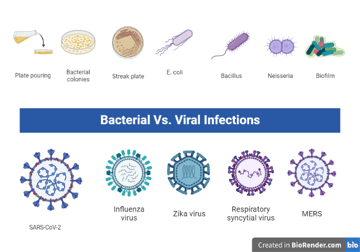
How to tell bacterial from viral infections: white cell patterns, CSF glucose, Gram stain vs CPE, and why antibiotics do not work against viruses.
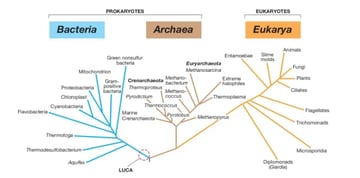
Archaea are a separate domain of prokaryotes, distinct from bacteria. Learn their key characteristics, real examples (methanogens, halophiles, thermophiles), how they compare with...
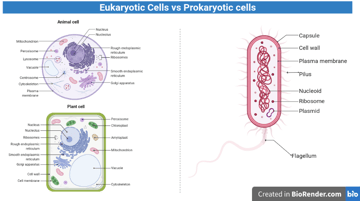
Prokaryotic or eukaryotic? A clear comparison, what the two cell types share, and straight answers on protozoa, Mycoplasma, prions, algae, and archaea.