
Automated Identification and Antimicrobial Susceptibility Testing
How automated systems identify bacteria and generate MICs, how they differ from manual methods, and when an automated result should be confirmed before it is reported.

Nisha Rijal is a microbiologist with nearly 15 years of frontline diagnostic and surveillance experience at the National Public Health Laboratory (NPHL), national reference laboratory under the Department of Health Services, Nepal. She currently works as an AMR Support Officer at the World Health Organization (WHO), Nepal, where her work focuses on strengthening antimicrobial resistance surveillance systems and translating AMR data into actionable public health response.
Her research, published in peer-reviewed journals and cited over 220 times, spans some of the most clinically significant infectious disease challenges in Nepal and South Asia: antimicrobial resistance trends in Vibrio cholerae across an 11-year national surveillance dataset, sero-epidemiology of scrub typhus in patients with acute febrile illness, lower respiratory tract infections in HIV-positive patients, and gonococcal resistance surveillance. She was a contributor to Nepal's National Antimicrobial Resistance Containment Action Plan, a foundational policy document for AMR governance in Nepal. You can find list of Nisha Rijal's article here in Google Scholar.
This depth of experience is visible in her writing at Microbeonline. Her 53 published articles cover bacteriology, parasitology, mycology, immunology, and laboratory techniques, and are consistently among the most detailed and clinically grounded content on the site. She brings to every article the same standard that national reference laboratory work demands: methodological precision, awareness of real diagnostic constraints, and an understanding of what results actually mean for patient care in resource-limited settings.
Her areas of particular expertise include antimicrobial susceptibility testing and resistance mechanism detection, quality assurance in clinical microbiology, and laboratory-based infectious disease surveillance.
Nisha Rijal contributes to Microbeonline in a personal capacity. Her views and writing do not represent the positions of the World Health Organization or any other institution.
How automated systems identify bacteria and generate MICs, how they differ from manual methods, and when an automated result should be confirmed before it is reported.
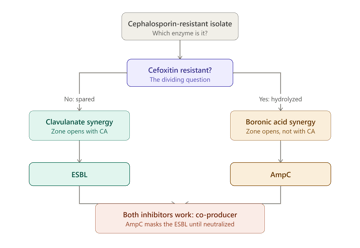
How the lab detects an AmpC beta-lactamase: the cefoxitin screen, the cloxacillin and boronic acid confirmatory tests, chromosomal versus plasmid-mediated AmpC, and the inhibitor l...
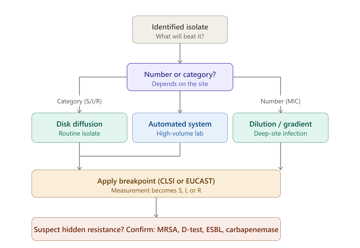
How antimicrobial susceptibility testing works, when to use disk diffusion vs. dilution vs. gradient vs. automated methods, how CLSI and EUCAST breakpoints turn a measurement into...
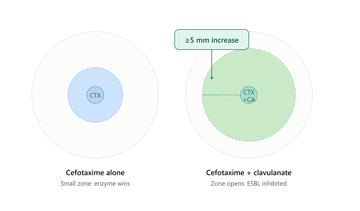
How the lab detects an extended-spectrum beta-lactamase: the screening cutoffs, the CLSI combined-disk confirmatory test and its ≥5 mm rule, the control strains, and why a co-produ...
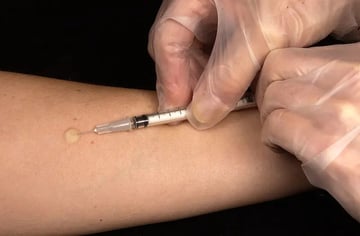
How the Mantoux tuberculin skin test works: the delayed-type hypersensitivity principle, how to place and read the induration, the 5/10/15 mm cutoffs and why they differ by risk gr...
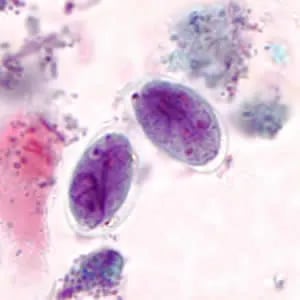
Learn the Wheatley trichrome staining technique for intestinal protozoa: reagents, step-by-step procedure, color results for Entamoeba, Giardia, and Balantidium, and troubleshootin...
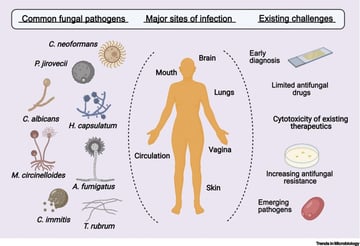
Classification of mycoses: by site of infection (superficial, cutaneous, subcutaneous, systemic, opportunistic), route of acquisition, and virulence. Complete article that links to...
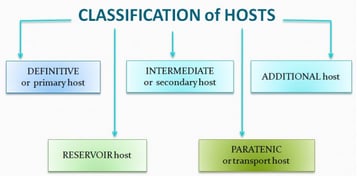
Understand the five types of host in parasitology (definitive, intermediate, reservoir, paratenic, and accidental) with worked examples, the definitive-vs-intermediate distinction...
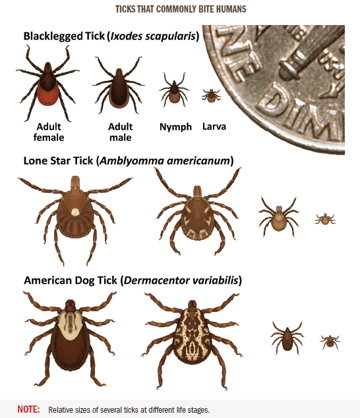
How do parasites reach and infect humans? Understand all six transmission routes: feco-oral, skin penetration, vector-borne, vertical, blood transfusion, and autoinfection with spe...
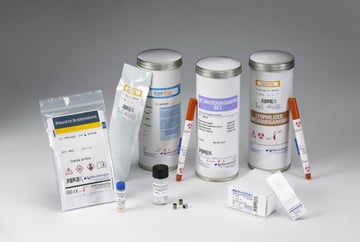
What a quality control strain is and why laboratories need them, what ATCC means, how to read a strain designation like ATCC 25922, the main culture collections, and which referenc...
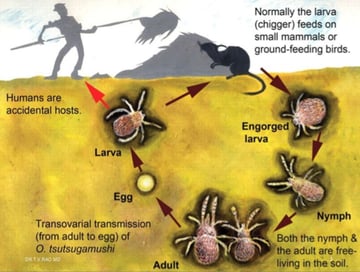
How Orientia tsutsugamushi causes scrub typhus, why the eschar at the chigger bite is the key clinical clue, how it is diagnosed (IFA, ELISA, Weil-Felix OX-K), and why treatment is...
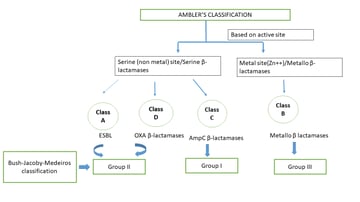
How the Ambler molecular classes (A through D) and Bush-Jacoby functional groups describe the same enzymes from two different angles, with the mapping most articles skip.
Enterococcus faecalis virulence factors, intrinsic antibiotic resistance, and the salt tolerance, bile esculin, and PYR tests used for lab diagnosis.
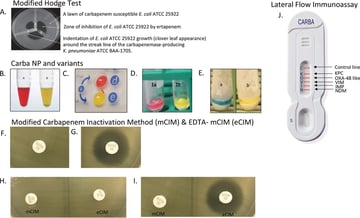
Phenotypic Methods for the Detection of Carbapenemases
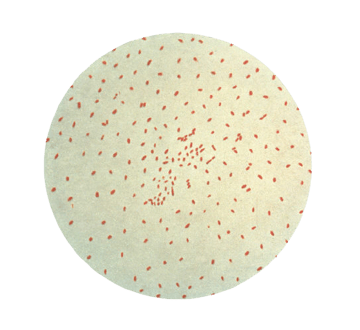
How Bordetella pertussis toxins damage the airway to cause whooping cough, why antibiotics help most in the early stage, the three clinical phases, and how pertussis is diagnosed.