
Robertson's Cooked Meat (RCM) Medium: Principle, Composition, Uses, and Interpretation
Robertson's cooked meat medium cultivates and enriches anaerobes — especially Clostridium species — using meat particles as natural reducing agents. Learn the principle, preparation, how to interpret saccharolytic vs proteolytic reactions, and how it compares to thioglycollate broth.
A blood culture bottle flags positive. Gram stain shows gram-positive rods with subterminal spores. The laboratory suspects Clostridium perfringens bacteremia which is a life-threatening complication of gas gangrene and septic abortion. Subcultures are set up on blood agar anaerobically and into Robertson's cooked meat medium for enrichment. In RCM, the meat particles maintain anaerobic conditions passively throughout incubation, without requiring an anaerobic jar for the enrichment broth itself.
Three days later, the RCM tube shows reddening of the meat particles with a rancid smell, the saccharolytic reaction of C. perfringens. This result confirms the identification and guides the surgical team to add urgent wound debridement to the antibiotic regimen.
Robertson's cooked meat medium is unique among enrichment broths: it does not just support anaerobe growth, it also differentiates between Clostridium species by the reactions produced in the meat itself.
Robertson’s Cooked Meat (RCM) medium is used to cultivate aerobic, microaerophilic, and anaerobic microorganisms, especially Clostridium species. It is also known as cooked meat broth (CMB) as it contains pieces of fat-free minced cooked meat of ox heart and nutrient broth. It supports the growth of both spore-forming and non-spore-forming obligate anaerobes and also differentiates between putrefactive and saccharolytic species.
Oxygen in culture media can be reduced by various agents such as glucose, thioglycollate, cooked meat pieces, cysteine and ascorbic acid.
Thioglycollate broth contains nutrient broth, and 1% thioglycollate is also used to cultivate anaerobes.
Principle
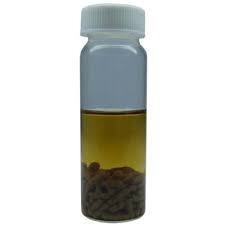 Figure: Robertson’s Cooked Meat Medium
Before inoculation, RCM/CMB medium is boiled to make it oxygen-free. After inoculation, it is covered with a layer of sterile liquid paraffin oil to prevent the entry of oxygen into the medium. The medium’s ingredients help maintain the anaerobic (reduced) environment.
- Unsaturated fatty acids in meat utilize oxygen for auto-oxidation. This reaction is catalyzed by hematin in the meat.
- Glutathione and cysteine (both reducing agents) present in meat also utilize oxygen.
- Sulphydryl compounds (present in cysteine) also contribute to a reduced oxidation-reduction potential.
Why the meat is cooked before use: Raw meat contains proteolytic enzymes that would continue to break down proteins in the medium during incubation, interfering with both the reducing action and the interpretation of results. Cooking denatures these enzymes and also denatures the muscle proteins, making reducing substances (glutathione, cysteine) more available for oxygen scavenging. This is why the medium is called "cooked meat" medium, not "raw meat" medium.
Composition
Ingredients per liter of deionized water:
| Cooked Meat Medium | 250.0 gm |
|---|---|
| Peptic Digest of Animal Tissue | 17.5 gm |
| Dextrose | 5.0 gm |
| Sodium Chloride | 5.0 gm |
| Yeast Extract | 5.0 gm |
| Iron Filings | 10.0 gm |
| Hemin | 10.0 ml |
| Vitamin K | 10.0 ml |
Final pH 6.8 +/- 0.3 at 25ºC.
- Adjusted and/or supplemented as required to meet performance criteria
Cooked Meat Medium: Meat particles act as a reducing and detoxifying substance, thereby disabling harmful by-products that may be produced by the replicating organism. Because reducing substances are more available in denatured protein, the meat particles are cooked before use in the medium.
Iron filings: Reducing substance. Iron filings and muscle tissue permit the growth of strict anaerobes.
Nutritional supplements: Nutritional requirements needed by most bacteria are provided by peptic digest of animal tissues, yeast extract, and dextrose. Hemin and vitamin K are added to enhance the growth of anaerobic microorganisms. Amino acids and other nutrients are also supplied by the muscle protein in the heart tissue granules.
Preparation of the medium
- Robertson’s cooked meat medium is best prepared from ready to use dehydrated granules available from most suppliers of culture media.
- Using a small tube or scoop pre-marked to hold 1g of granules, dispense the medium in 1 g amounts in screw-cap bottles or tubes.
- Add 10 ml of distilled water, mix, and allow to soak for 5 minutes.
- Sterilize the medium by autoclaving (with caps loosened) at 121°C for 15 minutes. When cool, tighten the bottle caps. Date the medium and give it a batch number.
- Store the medium in a cool dark place, ensuring the bottle cops are tightly screwed.
Shelf-life: 2 years, providing there is no change in the volume or appearance of the medium to suggest contamination.
pH of the medium: This should be within the range pH 7.0-7.4 at room temperature.
Inoculation
Depending on the specimen, the cooked meat medium is inoculated using a swab, Pasteur pipette, or wire loop. If using a swab this should be inserted to the bottom of the container.
For the culture of strict anaerobes, the medium is best used fresh or after being placed (with bottle top loosened) in a container of boiling water for 10-15 minutes to drive off any dissolved oxygen or in a water bath at 80°C for 30 minutes to make it oxygen-free. Allow the medium to cool to room temperature before inoculating it. The surface of the CMB medium may be covered with a layer of sterile liquid paraffin.
Interpretation of RCM Results
Robertson's cooked meat medium differentiates Clostridium species by two types of reaction: saccharolytic (carbohydrate fermentation) and proteolytic (protein digestion), which produce distinctive changes in the meat particles and the broth:
| Reaction Type | Appearance of Meat | Odor | Mechanism | Representative Organisms |
|---|---|---|---|---|
| Saccharolytic | Meat turns pink/red | Rancid, sour | Carbohydrate fermentation produces acid and gas; acid pH causes reddening of meat due to pH indicator effect | Clostridium perfringens, C. butyricum, C. tertium |
| Proteolytic | Meat turns black | Foul, putrefactive ("putrid") | Protein digestion releases H₂S, amines, indole; H₂S reacts with iron in meat → black iron sulphide | Clostridium tetani, C. histolyticum, C. sporogenes |
| Both saccharolytic and proteolytic | Meat blackens and may show reddening | Foul + rancid | Both carbohydrate and protein breakdown | Clostridium bifermentans |
| Neither (asaccharolytic, non-proteolytic) | Meat unchanged | No distinctive odor | No carbohydrate or protein breakdown | Some non-pathogenic Clostridium spp. |
| No growth | Meat and broth unchanged | None | Organism did not survive or is not anaerobic | Obligate aerobes, failed inoculation |
Key clinical differentiations:
- C. perfringens (gas gangrene): Saccharolytic: red meat, rancid smell
- C. tetani (tetanus): Proteolytic: black meat, putrid smell
- C. botulinum (botulism): Proteolytic: similar to C. tetani; differentiated by further tests
Troubleshooting RCM Medium
| Problem | Likely Cause | Action |
|---|---|---|
| Aerobic organisms growing (contamination) | Paraffin layer not applied; inadequate de-oxygenation before inoculation | Boil medium for 10–15 min before inoculation; apply sterile liquid paraffin layer immediately after inoculation; ensure tight cap |
| No growth of known anaerobe | Medium not de-oxygenated; organism too fastidious for RCM alone | Boil fresh tube before use; supplement with hemin and vitamin K for fastidious anaerobes; use pre-reduced media for strict anaerobes |
| Meat turns black in uninoculated control | Iron filings reacting with dissolved oxygen; medium stored improperly | Check storage conditions (cool, dark, tightly capped); use within shelf life (2 years); discard if blackening occurs before inoculation |
| Rancid smell in uninoculated control | Medium spoiled; contamination during preparation | Discard batch; check sterility testing of batch |
| Paraffin layer disrupted | Vigorous handling during incubation or transport | Handle tubes gently; ensure paraffin solidifies before moving |
RCM vs Thioglycollate Broth
Both are liquid enrichment media for anaerobes, but they differ in mechanism and application:
| Feature | RCM | Thioglycollate Broth |
|---|---|---|
| Reducing mechanism | Meat particles (unsaturated fatty acids, cysteine, glutathione) | Thioglycollate salt (chemical reducing agent) |
| Additional feature | Differentiates saccharolytic vs proteolytic organisms by meat reaction | No differential reaction — growth/no growth only |
| Organism range | Aerobic, microaerophilic, anaerobic; both spore-forming and non-spore-forming | Aerobic and anaerobic; primarily non-differentiating |
| Long-term storage | Excellent — preserves stock organisms for years | Moderate — shorter shelf life for stored cultures |
| Preparation | Dehydrated granules (easy) | Standard broth preparation |
| Best for | Clostridium identification; stock culture preservation; enrichment from small inocula | Rapid oxygen-requirement determination; routine anaerobe enrichment |
→ For the full thioglycollate broth article, see: Thioglycollate Broth
Uses of Robertson’s cooked meat medium
- Cultivation of aerobic, microaerophilic, and anaerobic microorganisms, especially Clostridium species. It supports the growth of both spore-forming and non-spore-forming obligate anaerobes.
- It is useful as an enrichment broth for cultivating organisms from a very small inoculum.
- Additionally, researchers have found that cooked meat medium preserves the viability of organisms over a long period of time and is useful in maintaining anaerobic stock organisms.
- The Food and Drug Administration recommends its use in the enumeration and identification of Clostridium perfringens from food.
How to Remember: RCM Medium
"Red = saccharolytic, Black = proteolytic":
- Red meat in RCM = acid from carbohydrate fermentation = saccharolytic = C. perfringens
- Black meat in RCM = H₂S from protein digestion + iron = proteolytic = C. tetani, C. botulinum
Why the meat is cooked — "Cook to reduce": Cooking denatures muscle proteins and enzymes → makes reducing substances (cysteine, glutathione) available → scavenge oxygen → maintain anaerobic conditions passively. The medium reduces itself.
The three things RCM does that thioglycollate cannot:
- Differentiates saccharolytic from proteolytic Clostridium
- Preserves anaerobe viability over years (stock culture)
- Supports enrichment from very small inocula (e.g., single organism)
Key Exam Facts in One Table
| Feature | Detail |
|---|---|
| Full name | Robertson's Cooked Meat (RCM) Medium / Cooked Meat Broth (CMB) |
| Type | Liquid enrichment medium — aerobic, microaerophilic, and anaerobic organisms |
| Key reducing agents | Unsaturated fatty acids (auto-oxidation); cysteine and glutathione (chemical reduction); sulphydryl compounds |
| Why meat is cooked | Denatures proteolytic enzymes; makes reducing substances more available |
| Paraffin oil layer | Prevents oxygen entry after inoculation |
| De-oxygenation before inoculation | Boil 10–15 min OR water bath at 80°C for 30 min |
| Saccharolytic reaction | Meat turns pink/red; rancid smell — C. perfringens |
| Proteolytic reaction | Meat turns black; putrid smell — C. tetani, C. botulinum |
| Unique feature | Differentiates saccharolytic from proteolytic Clostridium species |
| Stock culture use | Preserves anaerobe viability for up to 2 years |
| FDA recommendation | Enumeration and identification of C. perfringens from food |
| vs Thioglycollate | RCM differentiates and preserves; thioglycollate is simpler enrichment only |
| Shelf life | 2 years if stored correctly (cool, dark, tightly capped) |
References
- Forbes BA, Sahm DF, Weissfeld AS. Bailey & Scott's Diagnostic Microbiology. 14th ed. Elsevier; 2023.
- Miles RS, Hood J, Bundred NJ, Jeffrey RJ, Davies GC, Collee JG. The role of Robertson's cooked-meat broth in the bacteriological evaluation of surgical specimens. J Med Microbiol. 1985;20(3):373–378. https://doi.org/10.1099/00222615-20-3-373
- Murray PR, Rosenthal KS, Pfaller MA. Medical Microbiology. 9th ed. Elsevier; 2020.
- Garcia LS. Clinical Microbiology Procedures Handbook. 4th ed. ASM Press; 2016.
- Winn WC, Allen SD, Janda WM, et al. Koneman's Color Atlas and Textbook of Diagnostic Microbiology. 6th ed. Lippincott Williams & Wilkins; 2006.

Tankeshwar Acharya, MSc (Medical Microbiology)
Tankeshwar Acharya is an Assistant Professor in the Department of Microbiology at Patan Academy of Health Sciences (PAHS), Nepal, where he has been teaching and practicing clinical microbiology for over 14 years. He is the founder of Microbe Online, one of the leading free microbiology education resources on the web, covering bacteriology, mycology, parasitology, immunology, and clinical laboratory diagnostics written from direct experience in both the classroom and the diagnostic laboratory.