

Gram-positive bacteria retain the primary stain (crystal violet) color in the Gram staining procedure and appear purple under a light microscope. These bacteria have a cell wall containing a thick layer of peptidoglycan. Based on cell morphology, Gram-positive bacteria are divided mainly into “Gram-positive cocci” and “Gram-positive bacilli.”
Classification of Gram-positive rods
Gram-positive bacilli are a diverse group of bacteria that can further be classified into various subgroups based on their characteristics. There are five medically important genera of gram-positive bacilli: Bacillus, Clostridium, Corynebacterium, Listeria, and Gardnerella.
- Endospore-forming ability: Bacillus and Clostridia are spore-forming rods, while Listeria, Gardnerella, and Corynebacterium are not.
- Gaseous (oxygen requirements): Bacillus species are obligate aerobes, whereas Clostridium species are obligate anaerobes.
Some Gram-positive rods have a unique shape based on spores’ position, branches’ presence, etc. Actinomyces appear as irregular, branching gram-positive rods, Corynebacteria appear as club-shaped, Clostridium tetani appear as drum-stick appearances, and Nocardia appears as branching filaments.
Pathogenic Gram-Positive Bacilli
Gram-positive bacilli are responsible for “classical” diseases such as anthrax, diphtheria, listeriosis, and newer syndromes, particularly in immunocompromised individuals.
Bacillus cereus
There are two medically important Bacillus species; Bacillus anthracis and Bacillus cereus. Bacillus cereus is an aerobic, spore-forming, Gram-positive bacillus. Domestic animals, soil, and rice grains are the main reservoirs of this organism. Bacillus cereus spores can survive boiling during rice preparation and may germinate when rice is held at room temperature.
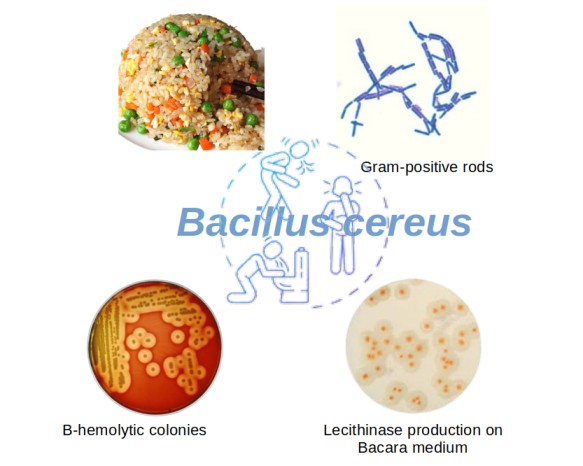 Figure: Bacillus cereus
Bacillus cereus causes food poisoning and is acquired by eating “reheated rice.” The spores germinate when rice is kept warm for many hours. It causes two forms of food poisoning. The emetic form comes from a heat-stable toxin (cereulide) preformed in food such as reheated rice, and causes nausea and vomiting a few hours after eating. The diarrheal form comes from a heat-labile enterotoxin produced in the gut, and causes watery, non-bloody diarrhea after a longer delay.
Bacillus anthracis
Bacillus anthracis is a large gram-positive bacillus with square ends (boxcar-like) frequently found in chains. It is a non-motile, spore-forming, and capsule-forming organism. The capsule of Bacillus anthracis is composed of D-glutamate (most capsules are polysaccharides).
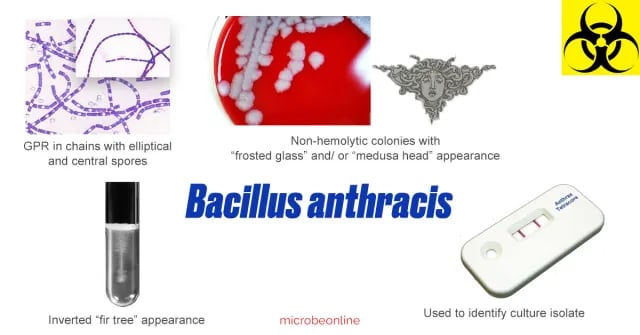 Figure: Major characteristics of Bacillus anthracis
Traumatic inoculation and inhalation of spores are two major routes of acquiring infection. Anthrax is a rare human disease caused by B. anthracis. It typically manifests as one of three forms; cutaneous, pulmonary, or gastrointestinal anthrax.
Clostridium perfringens
Clostridium perfringens is one of four medically important species of Clostridium. Others are; Clostridium tetani, Clostridium botulinum and Clostridioides difficile. All clostridia are anaerobic, spore-forming, gram-positive rods.
Clostridium perfringens is a large gram-positive rod. Soil, animals, and humans are the main reservoirs. It is a normal flora of the colon and female genital tract.
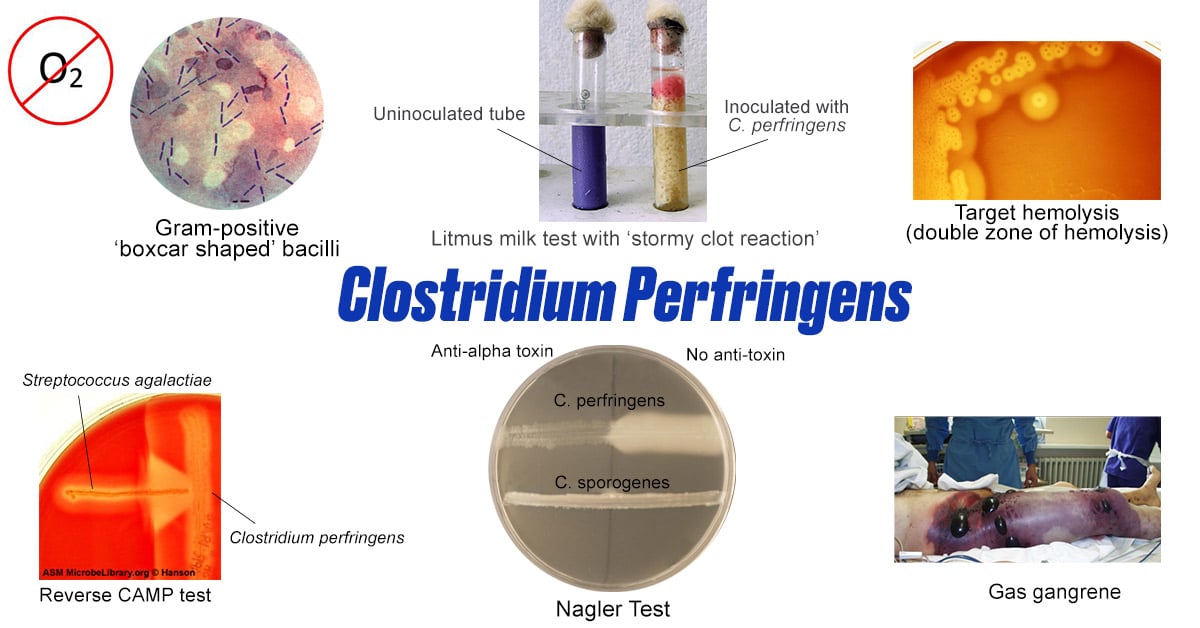 Figure: Major characteristics of Clostridium perfringens
It causes two distinct diseases, gas gangrene and food poisoning, depending on the route of infection. Food poisoning is transmitted by eating partially cooked meat, stew, and gravy. Gas gangrene (myonecrosis, necrotizing fasciitis) is associated with road-traffic accidents and septic abortions.
Clostridium tetani
Clostridium tetani is an anaerobic, gram-positive, spore-forming rod. C. tetani looks like a tennis racket because of a terminal spore. It is found ubiquitously in soil, and the mode of infection is traumatic inoculation of bacterial spores.
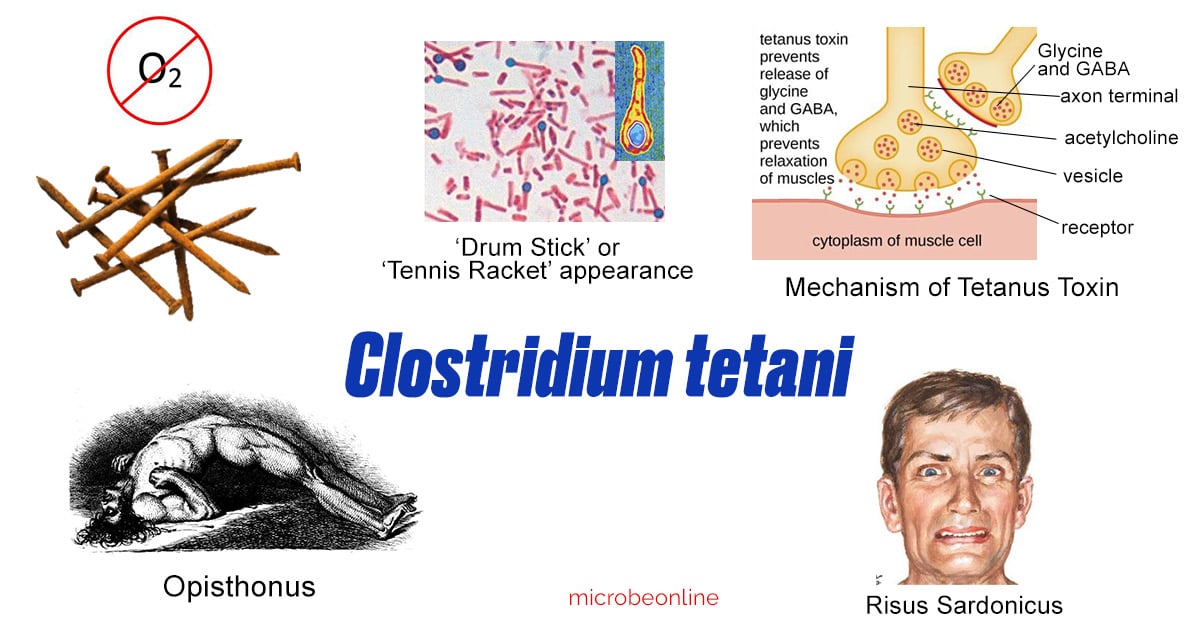 Figure: Major characteristics of Clostridium tetani
Clostridium tetani causes tetanus, a typical spastic paralysis with characteristic manifestations like “lock-jaw” and “risus sardonicus.” Tetanus toxin (tetanospasmin) is the major virulence factor of this organism. Tetanus toxoid and hyperimmune globulin are used to prevent the occurrence of tetanus.
Clostridium botulinum
An anaerobic, gram-positive, spore-forming rod found commonly in the soil, Clostridium botulinum is the causative agent of botulism.
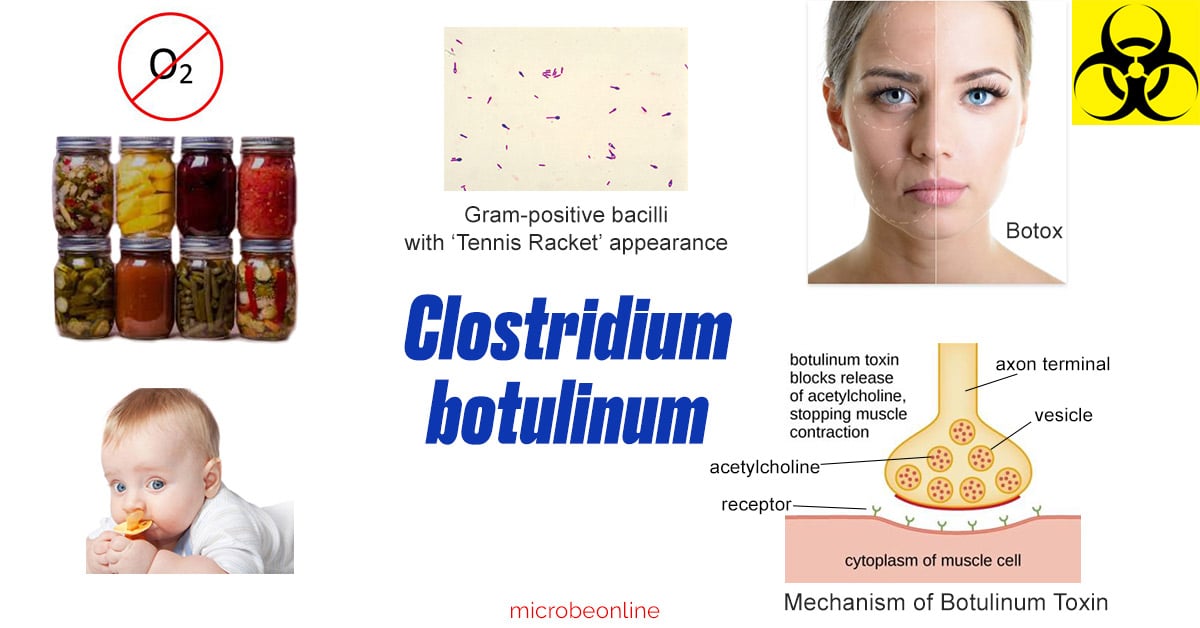 Figure: Major characteristics of Clostridium botulinum
Infection with Clostridium botulinum is acquired by ingesting preformed botulinum toxin found in improperly canned foods and smoked fish. Botox is a commercial preparation of botulinum toxin used to reduce facial wrinkles. Botulinum toxin is also used to treat certain spasmodic muscle disorders such as torticollis, “writer’s cramp,” and blepharospasm.
Clostridioides difficile
Clostridioides difficile is an anaerobic, gram-positive, spore-forming rod. It is transmitted by the fecal-oral route and colonizes the large intestine of approximately 3% of the general population, increasing up to 30% in hospitalized patients.
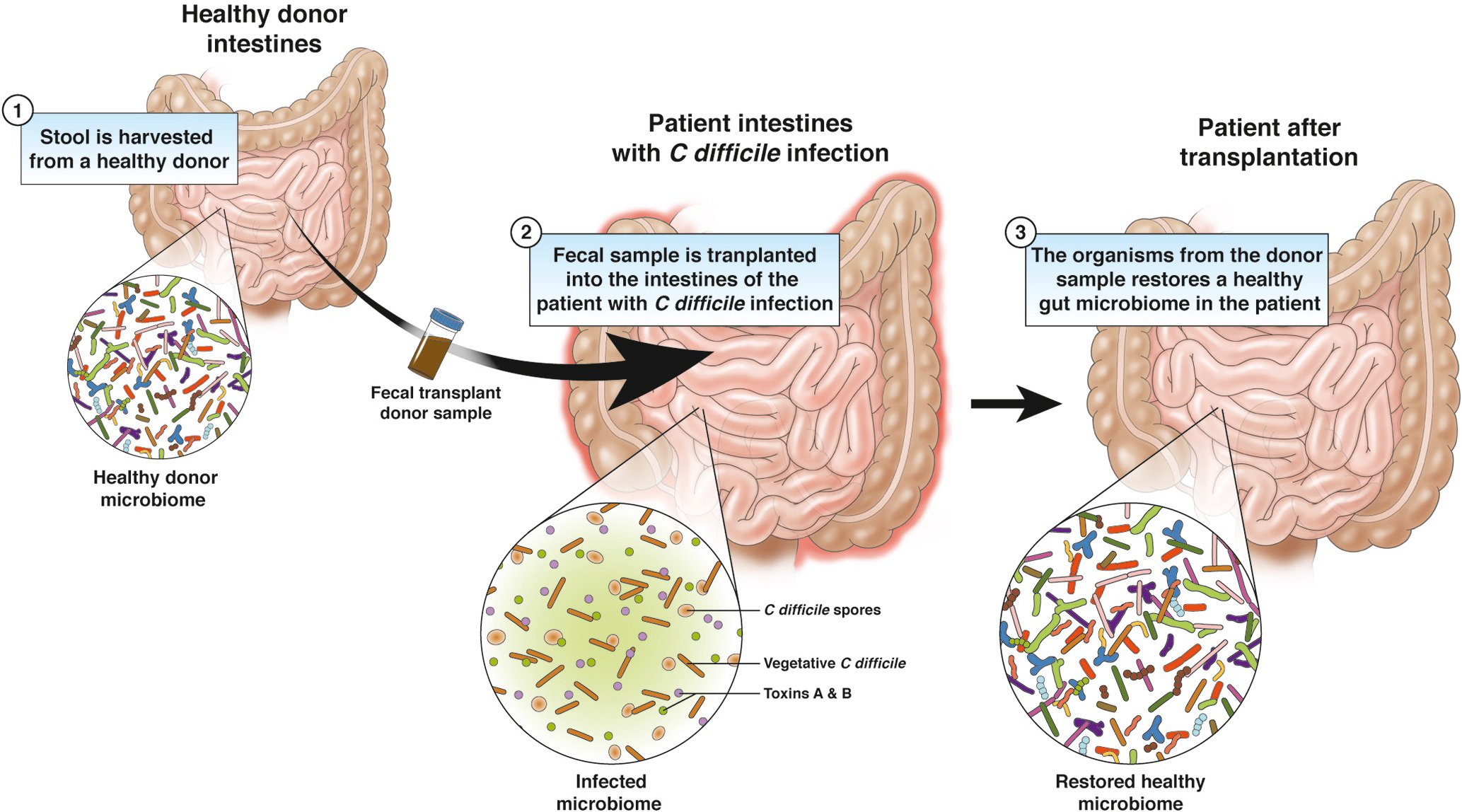 Figure: Fecal Transplant
Clostridioides difficile is a common cause of hospital-acquired diarrhea and can cause antibiotic-associated pseudomembranous colitis. Fecal transplantation is a newer therapeutic approach for the treatment of this disease.
Corynebacterium diphtheriae
Corynebacterium is a club-shaped (i.e., they are thinner on one end than the other) gram-positive rod. In Gram stain, these bacteria appear as V- or Y-shaped arrangements or in clumps that resemble Chinese letters. The rods have a beaded appearance, and the bead consists of highly polymerized polyphosphate granules. These granules stain metachromatically in Albert staining.
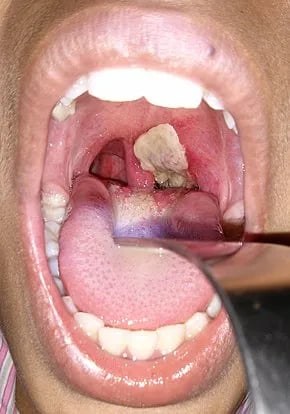 Figure: Pseudomembrane seen in a diphtheria case
Toxigenic strains of C. diphtheriae are responsible for diphtheria and are transmitted by airborne droplets. Diphtheria is characterized by the presence of thick, gray, adherent pseudomembrane over the tonsils and throat.
Listeria monocytogenes
Listeria monocytogenes is a small gram-positive rod arranged in V or L-shaped forms similar to corynebacteria. Domestic animals (cows) are the main reservoir of this organism. It exhibits tumbling movement, gives a narrow zone of beta-hemolysis, and grows well at cold temperatures.
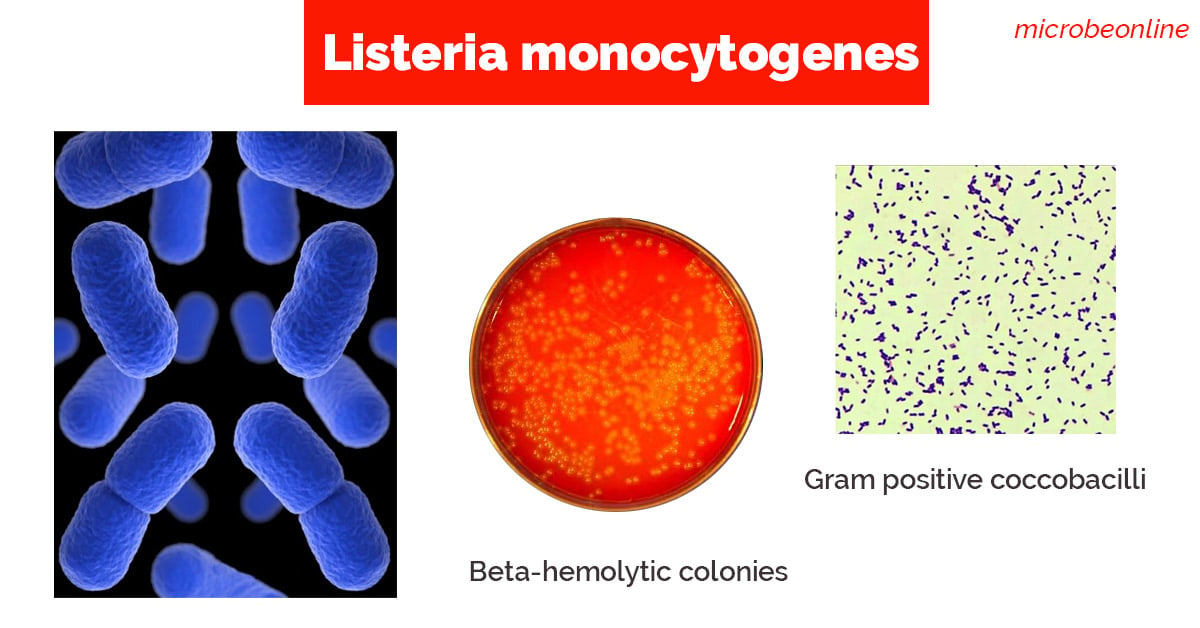 Figure: Major characteristics of Listeria monocytogenes
Listeria monocytogenes causes neonatal sepsis, diarrhea, and meningitis (in immunocompromised individuals). People acquire listeria infection by ingesting unpasteurized milk products or contaminated refrigerated food products. Listeriolysin is the major virulence factor of this organism.
Branching (Filamentous) Organisms
Actinomyces israelii
Actinomyces israelii is one of the medically important Actinomycetes, the other being Nocardia asteroides. Actinomycetes are gram-positive bacteria with filaments that resemble the hyphae of fungi.
 Figure: Actinomyces in Gram-stain and culture
Actinomyces israelii is a normal flora of the oral cavity. These anaerobic gram-positive branching rods cause the disease actinomycosis.
Nocardia asteroides
Nocardia asteroides is an aerobe found in the soil. This weakly acid-fast bacteria appear as thin, gram-positive branching filaments on Gram stain.
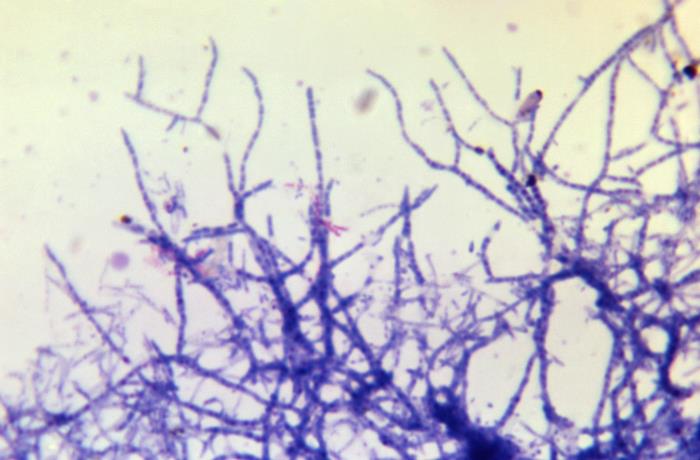 Figure: Nocardia in Gram-stain
Nocardia asteroides can cause pneumonia, lung abscess with cavity formation, lung nodules, or empyema in immunocompromised individuals.
Non-pathogenic Gram-positive rods
Lactobacillus
Lactobacilli are gram-positive, non-sporing rods. They are an essential microbiota of the mouth, colon, and female genital tract. In the female genital tract, they are the main source of lactic acid that helps to prevent the growth of many potential pathogens.
Lactobacilli are beneficial bacteria mainly used to manufacture fermented dairy, sourdough, meat, and vegetable foods and as probiotics.
Gardnerella vaginalis
Gardnerella vaginalis is a small, non-spore-forming Gram-positive rod, though it often stains Gram-variable or even Gram-negative because its cell wall is thin, so it can look like a coccobacillus on a smear. It is part of the normal vaginal flora in small numbers.
Gardnerella is the organism most associated with bacterial vaginosis, a condition in which the normal Lactobacillus-dominated vaginal flora is replaced by an overgrowth of Gardnerella and other anaerobes. This shift raises the vaginal pH and produces a thin, gray discharge with a characteristic fishy odor.
The classic laboratory clue is the clue cell: a vaginal epithelial cell so heavily coated with adherent Gardnerella that its border looks stippled and blurred. Bacterial vaginosis is not a classic infection with a single toxin or invasive mechanism, but a disturbance of the normal flora, which is why it is diagnosed by the overall picture (discharge, raised pH, clue cells, fishy odor on adding alkali) rather than by culturing the organism alone.
Streptomyces
Streptomyces is a Gram-positive bacteria whose shape resembles filamentous fungi. Streptomyces produces bioactive secondary metabolites such as antifungals, antivirals, and antibiotics. Today, nearly 80% of the antibiotics are sourced from the genus Streptomyces such as penicillin, streptomycin, gentamicin, linezolid, tetracycline, etc.
Diseases caused by gram-positive bacilli are as follows:
| Etiological agents | Disease (s) |
|---|---|
| Actinomyces israelii | Actinomycosis |
| Corynebacterium diphtheriae | Diphtheria |
| Listeria monocytogenes | Listeriosis, neonatal meningitis, sepsis, etc. |
| Clostridium perfringens | Gas gangrene (clostridial myonecrosis) |
| Clostridioides difficile | Diarrhea and colitis |
| Clostridium tetani | Tetanus |
| Clostridium botulinum | Botulism |
| Bacillus cereus | Foodborne diseases |
| Bacillus anthracis | Anthrax |
| Erysipelothrix rhusiopathiae | Erysipeloid |
| Nocardia asteroides | Nocardiosis |
| Cutibacterium (formerly Propionibacterium) acnes | Acne |
| Mycobacterium tuberculosis | Tuberculosis |
| Mycobacterium leprae | Leprosy |
This table also includes organisms such as Mycobacterium tuberculosis, M. leprae, Erysipelothrix, and Cutibacterium. Detailed information on Mycobacterium tuberculosis and M. leprae can be found in their respective articles.
References
- Tille, P. M. (2022). Bailey & Scott's Diagnostic Microbiology (15th ed.). Elsevier.
- Riedel, S., Morse, S. A., Mietzner, T., & Miller, S. (2019). Jawetz, Melnick & Adelberg's Medical Microbiology (28th ed.). McGraw Hill.
- Procop, G. W., et al. (2017). Koneman's Color Atlas and Textbook of Diagnostic Microbiology (7th ed.). Wolters Kluwer.

Comments
No comments yet. Be the first to share your thoughts.
Leave a comment
All comments are reviewed before they appear.