
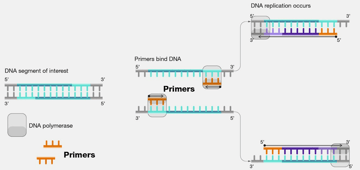
Designing PCR Primers: 6 Useful Tips
PCR primer design determines whether amplification succeeds or fails. Learn the six key parameters — length, Tm, GC content, GC clamp, specificity, and secondary structure — with t...
More detailed information about various types of Polymerase Chain Reaction Techniques
PCR primer design determines whether amplification succeeds or fails. Learn the six key parameters — length, Tm, GC content, GC clamp, specificity, and secondary structure — with t...
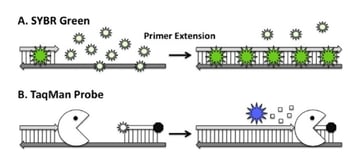
Real-time PCR (qPCR) amplifies and quantifies DNA simultaneously using fluorescent probes. Learn SYBR Green vs TaqMan, Ct values, and clinical uses in viral load testing.
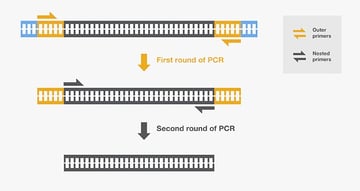
Nested PCR uses two successive PCR reactions with outer and inner primer sets to maximise sensitivity and specificity. Learn its principle, applications, and contamination risk.
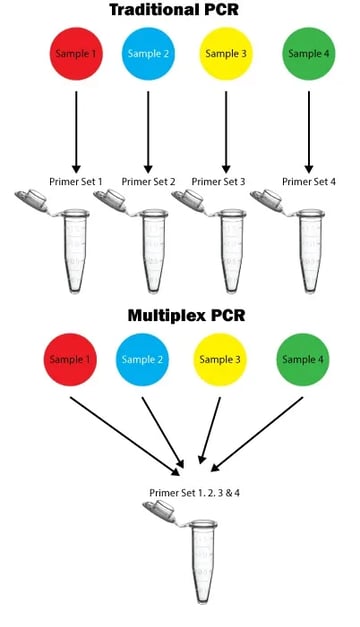
Multiplex PCR amplifies multiple targets simultaneously in one reaction. Learn primer design considerations, advantages, clinical applications, and limitations in diagnostic microb...
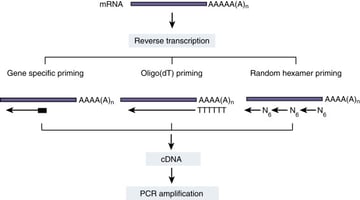
RT-PCR converts RNA to cDNA using reverse transcriptase before PCR amplification. Learn one-step vs two-step methods, primer types, and clinical uses in RNA virus detection.

PCR amplifies DNA exponentially in three steps: denaturation, annealing, and extension. Learn the components, steps, types: nested, multiplex, real-time, RT-PCR and clinical applic...