

Exons And Introns: Functions and Types
Exons are the coding parts of a gene; introns are the non-coding parts removed by splicing. Learn what each does, how splicing works, the types of each, and how they differ.
Articles related to Genetic Code.
Exons are the coding parts of a gene; introns are the non-coding parts removed by splicing. Learn what each does, how splicing works, the types of each, and how they differ.
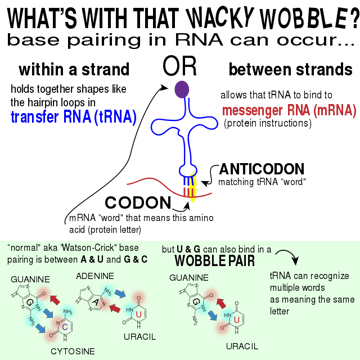
Understand wobble base pairing at the third codon position, how one tRNA recognizes multiple codons, and why the rule matters for translation efficiency.
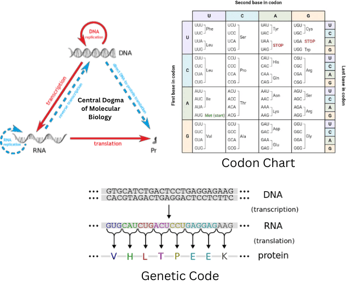
The central dogma explained for microbiology students: DNA to RNA to protein, the full codon chart, and the antibiotic targets on each step you get tested on. Clear notes with diag...
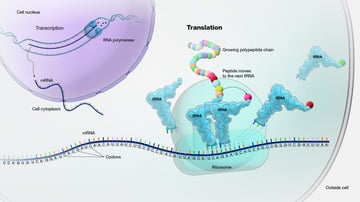
Translation is how a cell reads mRNA and builds a protein. Learn the three main steps (initiation, elongation, termination), how the ribosome, tRNA, and codons work together, and w...
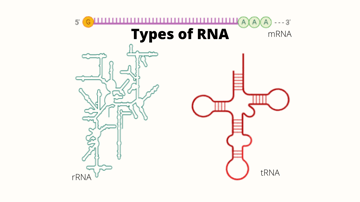
RNA comes in three main types: mRNA carries the message, tRNA brings amino acids, and rRNA builds proteins. Learn the structure and function of each, plus the regulatory RNAs.
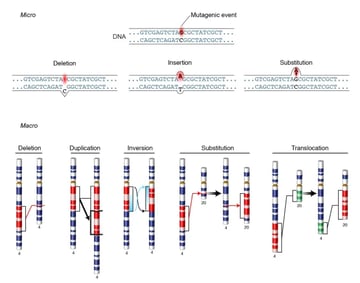
A mutation is a change in the DNA sequence. Learn the types (point, frameshift, and chromosomal), the difference between silent, missense, and nonsense mutations, and why mutations...