
Funny and Unusual Names of Infectious Diseases And the Stories Behind Them

On this page
Medical terminology is notoriously intimidating — until you discover that some of the most important infectious diseases in the world have names that make no immediate sense, names that were accidents of history, names borrowed from outbreaks at specific places, and names that reflected genuine confusion about what the disease even was.
Learning the story behind a disease name is one of the best memory devices in medicine. When you know that Q fever was named "Q" because nobody knew what caused it, you remember Q fever. When you know that Legionnaires' disease broke out at an American Legion convention in a Philadelphia hotel in 1976, you remember the epidemiology.
Below is a collection of infectious diseases with unusual, funny, or historically interesting names — and the clinical and microbiological facts you should know about each one.
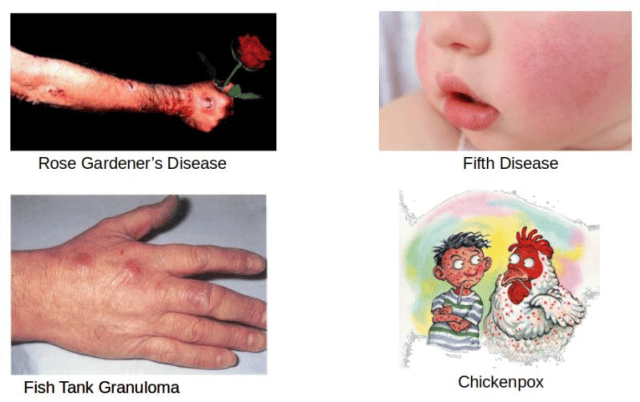 Figure: Interesting Disease Name
Darling disease
Histoplasma capsulatum causes histoplasmosis, also called “Darling’s disease.” American pathologist Samuel Taylor Darling reported histoplasmosis to be a fungal infection in 1905. Therefore, it is also called ‘darling’s disease.
Kissing disease
Infectious mononucleosis is called ‘kissing disease,’ caused by Epstein-Barr Virus (EBV). EBV is commonly transmitted by infected saliva and initiates infection in the oropharynx.
EBV is also the causative agent of Burkitt's lymphoma (endemic in sub-Saharan Africa) and nasopharyngeal carcinoma — making this "kissing disease" virus one of the most oncogenic human pathogens known.
Farmer’s lung disease
Farmer’s lung disease (FLD) is a hypersensitivity pneumonitis caused by inhaling moldy hay spores. Farmers are at a higher risk of developing this disease than other occupations.
Rose Gardner’s disease
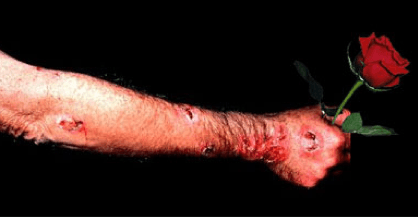 Figure: Pic is self-illustrative: Rose Gardener’s Disease.
Sporotrichosis, also called rose gardener’s disease, is caused by Sporothrix schenckiii. Sporotrichosis is an occupational hazard for farmers, nursery workers, gardeners, and florists.
Swimming pool granuloma/Fish Tank granuloma
It is a disease caused by nontuberculous mycobacteria (NTM), Mycobacterium marinum. The usual habitat of Mycobacterium marinum is the sea or fresh water, and traumatic injury while swimming/cleaning a fish tank/ aquarium might help to acquire this infection.
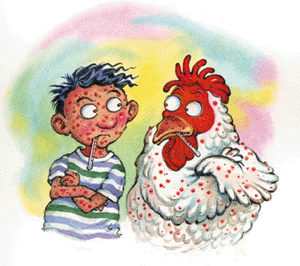 Figure: Chicken pox?
Fifth Disease
Erythema infectiosum (the fifth disease) is the most common manifestation of human parvovirus B19 infection. This disease got its name because it was fifth in a list of historical classifications of common skin rash illnesses in children.
Parvovirus B19 is also the cause of aplastic crisis in patients with sickle cell disease and haemolytic anemias — in these patients, "slapped cheek" disease can be life-threatening rather than trivial.
Chickenpox
The question was, “Write properties of a virus causing chickenpox.” I got the answer: It is a pox virus infecting chickens. But: Chickenpox is a disease caused by the varicella-zoster virus, a member of the herpes simplex virus family, not a poxvirus.
Do not get confused, chickenpox does not have any relationship with either chicken or the Poxvirus. Varicella-zoster virus causes varicella (chickenpox), highly contagious but mild disease in children. It is characterized by a generalized vesicular eruption of skin and mucus membranes.
The leading explanation for the "chicken" in chickenpox is that the pocks resemble chickpeas (cicer arietinum) in size and appearance — though this is disputed. What is not disputed: do not confuse it with smallpox (caused by Variola virus, a true Poxvirus), a mistake with potentially catastrophic clinical consequences.
Q Fever — The Disease Named After a Question Mark
In 1935, abattoir workers in Brisbane, Australia began falling ill with a febrile illness nobody could explain. The investigating physician, Edward Derrick, could not identify the causative agent and named it "Q fever" — Q for query, because the cause was unknown.
The organism was eventually identified as Coxiella burnetii, an obligate intracellular bacterium. Q fever is a zoonosis — farm animals (cattle, sheep, goats) are the primary reservoir, and humans are infected by inhaling contaminated aerosols from birth products, faeces, or unpasteurised milk. Q fever can present as an acute febrile illness or as chronic endocarditis in patients with pre-existing valvular disease. It is one of the most important causes of culture-negative endocarditis worldwide — the organism does not grow in standard blood culture systems.
Legionnaires' Disease — Named After an Outbreak at a Convention
In July 1976, delegates attending the American Legion convention at the Bellevue-Stratford Hotel in Philadelphia began falling ill with severe pneumonia. By the end of the outbreak, 221 people were infected and 34 had died. The causative organism — Legionella pneumophila — was identified months later, growing in the hotel's air conditioning cooling towers.
The name has stuck permanently. Legionella thrives in warm water systems: cooling towers, hot water tanks, hospital plumbing, showerheads. Outbreaks in hospitals and hotels continue to this day.
Legionnaires' disease causes a severe pneumonia with characteristic extrapulmonary features — hyponatraemia (low sodium), elevated liver enzymes, and confusion. The urinary antigen test is the fastest diagnostic method in clinical practice. Treatment is with fluoroquinolones or azithromycin, not beta-lactams (despite it being a bacterial pneumonia).
Pontiac Fever — The Mild Twin
In 1968, employees of the Pontiac, Michigan health department developed a self-limiting febrile illness with no pneumonia — later found to be caused by the same Legionella pneumophila responsible for Legionnaires' disease, but producing a completely different clinical syndrome.
Why the same organism causes severe pneumonia in some people and a mild flu-like illness in others remains incompletely understood — probably related to inoculum size, host immune status, and bacterial strain. Pontiac fever resolves without treatment; Legionnaires' disease requires antibiotics and can be fatal.
Woolsorter's Disease — Anthrax in the Textile Industry
Before modern biosafety, workers who sorted raw wool and animal hides were at risk of inhaling spores of Bacillus anthracis — the cause of anthrax. Inhalational anthrax was so strongly associated with this occupation that it acquired the name "woolsorter's disease."
Clinical hook: Inhalational anthrax is the most lethal form of anthrax and the form weaponised in the 2001 US anthrax letter attacks. It begins with non-specific flu-like symptoms but progresses rapidly to haemorrhagic mediastinitis and septicaemia. The mediastinal widening on chest X-ray is a classic radiological finding. Treatment requires ciprofloxacin or doxycycline.
Trench Fever — Born in the First World War
Bartonella quintana causes a relapsing febrile illness (fever recurring every five days — quintana = fifth in Latin) that devastated soldiers living in the trenches of World War I. Poor sanitation and louse infestation meant millions of soldiers were exposed. The body louse (Pediculus humanus corporis) is the vector.
After WWI, trench fever largely disappeared — only to re-emerge in homeless populations in modern cities, where overcrowding and poor hygiene recreate the conditions that allowed it to thrive.
Clinical hook: B. quintana also causes bacillary angiomatosis in HIV-infected patients (alongside B. henselae) and is an important cause of culture-negative endocarditis in homeless individuals.
Cat Scratch Disease — Exactly What It Sounds Like
Bartonella henselae, transmitted through the scratch or bite of an infected cat (or kitten — kittens have higher bacteraemia rates), causes a self-limiting lymphadenopathy — usually in the axilla or epitrochlear nodes draining the scratched arm.
The name is refreshingly literal in a field full of eponyms and acronyms.
Clinical hook: In immunocompetent patients, it resolves without treatment. In HIV-infected patients, B. henselae causes bacillary angiomatosis — vascular tumour-like skin lesions that can mimic Kaposi's sarcoma — and peliosis hepatis (blood-filled cavities in the liver).
Rabbit Fever — Tularaemia
Francisella tularensis causes tularaemia, nicknamed "rabbit fever" because hunters who skinned infected rabbits developed ulceroglandular disease — a skin ulcer at the inoculation site with regional lymphadenopathy. Handling infected animal carcasses is the classic exposure.
F. tularensis is classified as a Tier 1 select agent (potential bioweapon) because the pneumonic form — acquired by inhaling aerosols — is highly lethal and requires very few organisms (as few as 10) to establish infection. Laboratory staff should be warned before processing specimens from suspected tularaemia cases.
Malta Fever / Undulant Fever / Brucellosis — One Disease, Many Names
Brucella infection has accumulated names from every corner of its epidemiology:
- Malta fever — British soldiers stationed in Malta in the 1800s developed the illness from drinking local goat's milk
- Undulant fever — the fever characteristically undulates (rises and falls) over weeks
- Bang's disease — the bovine form, named after Danish veterinarian Bernhard Bang
- Mediterranean fever — describing its geographic distribution
Brucellosis is the most common zoonotic infection worldwide. Clinical presentation is protean — fever, sweats, arthralgia, hepatosplenomegaly. It is one of the most important causes of culture-negative endocarditis and sacroiliitis. A history of consuming unpasteurised dairy products or occupational animal exposure is the key epidemiological clue.
Whipple's Disease — A Nobel Laureate's Legacy
Tropheryma whipplei was named after George Hoyt Whipple, the American pathologist who first described the disease in 1907 — in a medical missionary who presented with weight loss, diarrhoea, and joint pain. Whipple later won the Nobel Prize in Physiology or Medicine (1934) for unrelated work on liver and anemia.
The organism itself is a Gram-positive actinobacterium that was not successfully cultured until 2000, nearly a century after the disease was first described. Before that, diagnosis required intestinal biopsy showing PAS-positive macrophages in the lamina propria.
Whipple's disease is rare but memorable for its classic triad: diarrhoea, weight loss, and arthralgia. CNS involvement (cognitive decline, supranuclear ophthalmoplegia) can occur. Treatment is prolonged — typically ceftriaxone followed by trimethoprim-sulfamethoxazole for at least one year.
Lyme Disease — A Town in Connecticut
In 1975, a cluster of children in Old Lyme, Connecticut were diagnosed with what appeared to be juvenile rheumatoid arthritis — an unusual clustering that prompted investigation. The causative organism, Borrelia burgdorferi, was identified in 1982 by Willy Burgdorfer (hence burgdorferi), and the disease named after the town where the outbreak was first recognised.
Lyme disease has three stages. Early localised: erythema migrans (bull's-eye rash). Early disseminated: carditis, facial palsy, meningitis. Late disseminated: Lyme arthritis (large joints, especially the knee). The Ixodes tick vector must be attached for at least 36–48 hours to transmit infection — early tick removal is protective.
Hand, Foot, and Mouth Disease — The Name Is the Diagnosis
Enterovirus 71 and Coxsackievirus A16 cause a distinctive clinical syndrome of vesicular lesions on the hands, feet, and oral mucosa — named precisely and descriptively for its distribution.
Usually mild and self-limiting in children. However, Enterovirus 71-associated HFMD can cause severe neurological complications — brainstem encephalitis, pulmonary oedema — particularly in children under 5. Large outbreaks have occurred across Southeast Asia and China.
St. Anthony's Fire — Medieval Ergotism
Before the causative organism was understood, a gangrenous condition affecting limbs — caused by Claviceps purpurea (ergot fungus) contaminating rye bread — was called St. Anthony's Fire for the burning sensation it produced. Pilgrims travelling to St. Anthony's shrine in France sometimes recovered, possibly because the journey took them away from the contaminated grain supply.
Claviceps purpurea produces ergot alkaloids that cause intense vasoconstriction, leading to peripheral ischaemia and gangrene. The same alkaloids are the pharmacological basis for ergotamine (migraine treatment) and ergometrine (uterine contraction after delivery).
Ergotism is historically important but rare today. More relevant is ergotamine toxicity — patients on ergotamine derivatives for migraine can develop peripheral vascular insufficiency with overdose.
Swimmer's Itch — Cercarial Dermatitis
Bathers in lakes and ponds sometimes develop an intensely itchy papular rash after swimming — caused by penetration of the skin by cercariae (larval stage) of avian schistosome species that cannot complete their lifecycle in humans. The larvae die in the skin, triggering an immune response.
Swimmer's itch is self-limiting and requires only symptomatic treatment. It should be distinguished from seabather's eruption (caused by jellyfish larvae, affects areas covered by swimwear) and from human schistosomiasis (Schistosoma mansoni, S. haematobium), which can establish a full lifecycle and cause serious systemic disease.
Diseases Named After Places
Many infectious diseases carry permanent geographical markers in their names — reminders of where they were first described or caused significant outbreaks:
| Disease | Place | Organism |
|---|---|---|
| Lyme disease | Old Lyme, Connecticut, USA | Borrelia burgdorferi |
| Legionnaires' disease | Philadelphia, Pennsylvania, USA | Legionella pneumophila |
| Pontiac fever | Pontiac, Michigan, USA | Legionella pneumophila |
| Malta fever (Brucellosis) | Malta | Brucella melitensis |
| Marburg virus disease | Marburg, Germany | Marburg virus |
| Ebola | Ebola River, DRC | Ebola virus |
| West Nile virus | West Nile district, Uganda | West Nile virus |
| Nipah virus | Sungai Nipah village, Malaysia | Nipah virus |
| Hendra virus | Hendra, Queensland, Australia | Hendra virus |
| Valley fever (Coccidioidomycosis) | San Joaquin Valley, California, USA | Coccidioides immitis |
| Lassa fever | Lassa, Nigeria | Lassa virus |
| Ross River fever | Ross River, Queensland, Australia | Ross River virus |
The pattern reveals something important about emerging infectious diseases: they are almost always first identified when they spill into a new setting — a convention hotel, a river valley, a village — and the place name sticks permanently.
Diseases Named After People (Eponyms)
| Disease | Named After | Organism |
|---|---|---|
| Darling's disease (Histoplasmosis) | Samuel Taylor Darling | Histoplasma capsulatum |
| Whipple's disease | George Hoyt Whipple | Tropheryma whipplei |
| Bang's disease (Brucellosis in cattle) | Bernhard Bang | Brucella abortus |
| Weil's disease (Leptospirosis) | Adolf Weil | Leptospira interrogans |
| Vincent's angina | Henri Vincent | Fusobacterium + Treponema (ANUG) |
| Kaposi's sarcoma | Moritz Kaposi | HHV-8 |
| Burkitt's lymphoma | Denis Burkitt | EBV |
| Carrión's disease (Bartonellosis) | Daniel Alcides Carrión | Bartonella bacilliformis |
References
- Murray PR, Rosenthal KS, Pfaller MA. Medical Microbiology. 9th ed. Elsevier; 2020.
- Ryan KJ, Ray CG (eds). Sherris Medical Microbiology. 7th ed. McGraw-Hill; 2018.
- Cunha BA. Legionnaires' disease: clinical differentiation from typical and other atypical pneumonias. Infect Dis Clin North Am. 2010;24(1):73–105.
- Maurin M, Raoult D. Q fever. Clin Microbiol Rev. 1999;12(4):518–553.
- Pappas G, Papadimitriou P, Akritidis N, Christou L, Tsianos EV. The new global map of human brucellosis. Lancet Infect Dis. 2006;6(2):91–99.
- Steere AC. Lyme disease. N Engl J Med. 2001;345(2):115–125.

Tankeshwar Acharya, MSc (Medical Microbiology)
Tankeshwar Acharya is an Assistant Professor in the Department of Microbiology at Patan Academy of Health Sciences (PAHS), Nepal, where he has been teaching and practicing clinical microbiology for over 14 years. He is the founder of Microbe Online, one of the leading free microbiology education resources on the web, covering bacteriology, mycology, parasitology, immunology, and clinical laboratory diagnostics written from direct experience in both the classroom and the diagnostic laboratory.
Comments
No comments yet. Be the first to share your thoughts.
Leave a comment
All comments are reviewed before they appear.