
Characteristic Smell of Bacteria and Fungi: A Clinical and Laboratory Guide

On this page
A surgeon unwraps a burn patient's dressing and catches a faint sweet, grape-like scent before the culture result is back. An experienced microbiologist lifts the lid off a culture plate, takes a careful sniff, and says "that's Proteus" before running a single identification test. A clinician notices the distinctively putrid odor of a Clostridium difficile stool specimen and recognizes it as different from ordinary diarrhea before the lab confirms anything.
Smell is one of the oldest diagnostic tools in clinical microbiology. Though never officially standardized, it is genuinely useful when you know what you are detecting. Bacteria and fungi do not have odor themselves, but their metabolic byproducts called volatile organic compounds (VOCs), produced as they break down substrates, generate energy, and grow carry distinctive chemical signatures.
This article covers the characteristic odors of clinically important microorganisms, the biochemical basis of why they smell the way they do, and when that information actually matters at the bedside and in the laboratory.
Microorganisms can produce different types of volatile compounds that may give characteristics smell, pleasant scent, or pungent odor. The production of these volatile chemicals depends on that particular organism’s metabolic factors.
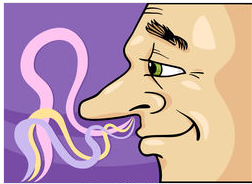 Figure: Characteristics smell of microorganisms
When anaerobic bacteria like Clostridium decompose organic matters (mainly proteins), various foul-smelling, incompletely oxidized odoriferous compounds like H2S, methyl mercaptan, cadaverine, putrescine, and ammonia. Cadaverine and putrescine smell like rotting flesh, whereas methyl mercaptan smells like rotten cabbage.
Sometimes odor produced by these microorganisms may give essential clues in the identification of microorganisms. For example, foul-smelling diarrhea and the absence of blood or mucus in the stool distinguish giardiasis from bacterial or viral diarrhea.
You may have seen a technician trying to “smell the difference” between bacterial cultures. Though some laboratory personnel regard sniffing as a helpful tool, others regard it as a biohazard.
⚠ Laboratory Safety: Sniffing Culture Plates
Sniffing culture plates is practiced informally in many microbiology laboratories but carries genuine infectious risk. Documented cases of laboratory-acquired brucellosis from sniffing Brucella cultures have been reported in the literature. Coccidioides immitis, Francisella tularensis, Burkholderia pseudomallei, and Mycobacterium tuberculosis are among the organisms where aerosol exposure during plate examination poses a serious hazard.
Safe practice:
- Never sniff plates containing or suspected to contain BSL-3 organisms (TB, Brucella, Francisella, Burkholderia pseudomallei)
- If smelling is used as an identification aid, waft air gently toward your nose with your hand rather than placing your nose directly over the plate
- All plate examination should occur inside a biosafety cabinet when pathogen identity is uncertain
- The smell of a culture is a presumptive clue only. It should never be used as the basis for a final identification
Characteristics odor produced by selected microbes
Microorganisms do not have odor on their own, but they may produce various metabolites that have distinguished smells of their own. For example, spoiled seafood’s odor is primarily due to trimethylamine oxide (TMAO) produced by the action of bacteria. The earthy odor of soil is caused by the production of a series of complex metabolites called geosmin by Streptomycetes. Many cyanobacteria are also responsible for the production of earthy odors and flavors in some freshwater.
Some of the characteristics smell produced by microorganisms is tabulated here;
| Microorganism | Characteristic Odor | Volatile Compound Responsible | Clinical/Lab Significance |
|---|---|---|---|
| Pseudomonas aeruginosa | Sweet, grape-like, fruity | 2-aminoacetophenone | Sniffing burn wound dressings; grape odor on culture plate is a useful presumptive clue |
| Proteus mirabilis / P. vulgaris | Burnt chocolate, rotten cooked fish | Various amines from amino acid deamination | Distinctive on SS agar; swarming + smell = strong presumptive Proteus |
| Clostridium difficile | Putrid, fecal, "horse manure" | Short-chain fatty acids (p-cresol, isocaproic acid) | Distinctive stool odor in CDI; experienced nurses and clinicians often note it |
| Clostridium perfringens | Rancid butter, foul | Butyric acid, gas (CO₂, H₂) | Gas gangrene wound odor; butyric fermentation of tissue carbohydrates |
| Bacteroides fragilis and pigmented Bacteroides group | Putrid, acrid | Short-chain fatty acids from proteolysis | Foul-smelling pus strongly suggests anaerobic infection |
| Peptostreptococcus anaerobius | Fecal | Short-chain fatty acids | Anaerobic infection of deep tissue, abscess |
| Gardnerella vaginalis | Fishy, ammoniacal | Trimethylamine, amines | Whiff test: fishy odor intensified by 10% KOH — hallmark of bacterial vaginosis |
| Eikenella corrodens | Bleach, crackers | Hypochlorite-like compound | Wound infections, human bite wounds; bleach odor on blood or chocolate agar |
| Staphylococcus spp. | Dirty sneakers, sour | Short-chain fatty acids (propionate, butyrate) | Skin infections; the "sour" smell of infected wounds |
| Streptococcus milleri group | Caramel, butterscotch | Diacetyl | Presumptive identification of S. milleri group from caramel odor on culture |
| Viridans streptococci (some) | Butter/butterscotch | Diacetyl | Similar to S. milleri; useful differentiating feature |
| Haemophilus spp. | Wet fur, "mousy" | Indole and related compounds | Distinct on chocolate agar; experienced lab staff recognize it |
| Pasteurella multocida | Pungent, indole-like | Indole | Animal bite wound isolates; pungent smell on culture |
| Nocardia spp. | Musty basement, earthy | Geosmin-related compounds | Pulmonary nocardiosis specimens; soil-dwelling organism |
| Streptomyces spp. | Earthy, petrichor | Geosmin | Cause of "petrichor" the smell of rain on dry earth |
| Corynebacterium spp. | Fruity, sweaty | Short-chain fatty acids | Skin infections, axillary odor; C. minutissimum in erythrasma |
| Citrobacter spp. | Dirty sneakers | Similar to Staphylococcus | Urinary and enteric isolates |
| Alcaligenes faecalis | Freshly cut apples | Fruity esters | Occasional nosocomial opportunist |
| Candida albicans | Yeast, bread-like | Ethanol, acetaldehyde | Vaginal candidiasis; yeast smell in culture |
| Burkholderia pseudomallei | Ammoniacal, musty corn tortillas | Ammonia, organic compounds | Melioidosis; important in Southeast Asia and South Asia; culture odor noted in BSL-3 settings |
| Actinomyces spp. | Sulphurous | Sulfur compounds | Actinomycosis; "sulfur granules" pus has a characteristic smell |
| Anaerobes (general) | Foul, putrid | H₂S, methyl mercaptan, cadaverine, putrescine | Hallmark of anaerobic infection; foul-smelling pus is never normal |
Why Do Bacteria Smell?
Bacteria produce volatile organic compounds (VOCs) as metabolic byproducts as incidental products of their core survival chemistry. The type of VOC a bacterium produces depends on:
1. Substrate available (what it is metabolizing) Bacteria breaking down proteins produce sulfur-containing compounds (H₂S, methyl mercaptan) and diamines (cadaverine from lysine, putrescine from ornithine). Bacteria fermenting carbohydrates produce organic acids (butyric, propionic, acetic) and gases (CO₂, H₂). This is why anaerobic infections of protein-rich tissue (muscle, deep fascia) smell so different from urinary tract infections.
2. Metabolic pathway used Fermentative organisms (anaerobes, facultative anaerobes) produce more diverse and pungent VOCs than strict aerobes. Oxidative metabolism is "cleaner", it goes all the way to CO₂ and water. Fermentation stops partway, leaving partially oxidized compounds with strong odors.
3. Specific enzyme systems Some organisms produce distinctive VOCs through specific enzymatic pathways:
- P. aeruginosa produces 2-aminoacetophenone via degradation of anthranilic acid. This compound is responsible for its grape scent
- Streptomyces and some cyanobacteria produce geosmin via a terpenoid pathway. This compound is responsible for the smell of rain on dry earth (petrichor) and the earthy taste in some drinking water
- S. milleri group produces diacetyl (the same compound that gives butter its smell) as a secondary metabolite
Key VOC classes and their smells:
| Compound Class | Examples | Typical Smell |
|---|---|---|
| Sulfur compounds | H₂S, methyl mercaptan, dimethyl sulfide | Rotten eggs, rotten cabbage, foul |
| Diamines | Cadaverine, putrescine | Rotting flesh, very foul |
| Short-chain fatty acids | Butyric, propionic, isocaproic acid | Rancid butter, sweaty, fecal |
| Indole and derivatives | Indole, skatole | Fecal, floral at low concentration |
| Ketones | Diacetyl, acetoin | Butter, caramel |
| Aromatic compounds | 2-aminoacetophenone | Grapes, sweet, fruity |
| Terpenoids | Geosmin | Earthy, soil, petrichor |
| Amines | Trimethylamine | Fishy |
Pungent/Unpleasant smell
Anaerobes are particularly pungent due to their reliance on sulfhydryl compounds to maintain redox balance. When an anaerobic infection is suspected, the specimen is often foul-smelling. Gram-negative anaerobes are often responsible for ‘morning breath.’
Anaerobic bacteria produce fatty acids and other odoriferous compounds while decomposing organic matters (putrefaction). Major such compounds are hydrogen sulfide (H₂S), methyl mercaptan (from sulfur amino acids), cadaverine (from lysine), putrescine (from ornithine), and ammonia. H₂S smell like rotten eggs at low concentration levels in the air. Cadaverine and putrescine smell like rotting flesh, methyl mercaptan smells like rotten cabbage, and ammonia has a strong odor that smells like urine or sweat.
Bacterioides fragilis: Pus containing Bacteroides species has a very unpleasant smell.
Under anaerobic conditions, Clostridium perfringens multiplies and produces alpha-toxin and other toxins, resulting in the rapid destruction of tissue carbohydrates with the production of gas in decaying tissues, particularly muscle. The affected tissue is foul-smelling.
Sweet grape-like scent
Pseudomonas aeruginosa produces a sweet grape-like scent, so wound dressings and agar plates are often sniffed for organism identification. Pseudomonas aeruginosa can famously generate a “grape juice” smell in infected burn patients.
The compound responsible is 2-aminoacetophenone, produced when P. aeruginosa catabolizes anthranilic acid via the kynurenine pathway. At low concentrations it is distinctly grape- or fruit-like; at higher concentrations it becomes musty. In burn units, experienced nurses often detect Pseudomonas colonization by smell before cultures confirm it. This is a real-world example of VOC-based diagnosis predating any laboratory result.
Ammoniacal smell
Woman infected with Gardnerella complaints of a grey, offensive, fishy ammoniacal smell. The fishy ammoniacal smell becomes more intense after adding a few drops of 10% potassium hydroxide. Burkholderia pseudomallei cultures also give off an ammoniacal odor.
The whiff test (Amsel's criteria for bacterial vaginosis) formalizes this observation: a drop of 10% potassium hydroxide is added to vaginal discharge. If bacterial vaginosis is present, the KOH volatilizes the amines produced by G. vaginalis and anaerobes, releasing an immediate fishy odor. A positive whiff test is one of the four Amsel criteria for diagnosing BV, alongside vaginal pH >4.5, clue cells on wet mount, and homogeneous discharge. The smell, in this case, is a diagnostic criterion.
Horse stable or Fecal Odor
C. difficile produces p-cresol and isocaproic acid as fermentation byproducts; compounds with a characteristically putrid, "horse stable" or fecal odor that experienced clinicians and nurses describe as distinct from ordinary diarrhea. Some clinical studies have investigated whether trained dogs can detect CDI by scent (they can, with high sensitivity), and VOC-based breath and stool tests for CDI are an active area of research.
Bleach-like odor
Eikenella corrodens, a gram-negative rod responsible for wound infections, gives a bleach-like odor when grown in Blood Agar or Chocolate Agar.
Caramel odor
Streptococcus milleri produces diacetyl (caramel odor). The detection of diacetyl (caramel odor) can be used in the presumptive identification of the “Streptococcus milleri” group.
VOC-Based Diagnostics: The Future of Smell in Medicine
The informal practice of sniffing culture plates represents an early, unsystematic version of what modern diagnostics is beginning to formalize: using volatile organic compounds as disease biomarkers.
Breath-based tuberculosis diagnosis is one of the most actively researched applications. Mycobacterium tuberculosis produces a distinctive VOC profile in breath, including methyl nicotinate and specific aldehydes. Studies using gas chromatography-mass spectrometry (GC-MS) have demonstrated that breath analysis can detect active TB with reasonable sensitivity. This technique is potentially useful in resource-limited settings where sputum culture is slow and smear microscopy misses many cases.
Electronic nose (e-nose) technology applies sensor arrays to detect the VOC fingerprint of bacterial cultures or patient specimens. Early studies show promise for distinguishing P. aeruginosa from S. aureus in wound infections, and for identifying bacterial pneumonia from exhaled breath.
Trained detection dogs have been studied for their ability to identify C. difficile infection, certain cancers, and malaria from human scent.
These technologies remain largely experimental, but they reflect a fundamental insight that practicing microbiologists have always known: bacterial metabolism produces a chemical signature, and that signature carries diagnostic information.
How to Remember: Distinctive Bacterial Smells
A memory framework built around the most exam-tested organisms:
"Grape, Chocolate, Bleach, Caramel, Fishy, and Earth" are the six most clinically tested smells:
- Grape = Pseudomonas aeruginosa (burn wounds, wound infections, blue-green pus)
- Burnt chocolate = Proteus mirabilis (UTI, swarming on agar)
- Bleach = Eikenella corrodens (human bite wounds)
- Caramel/butterscotch = Streptococcus milleri group (liver abscess, dental abscess)
- Fishy = Gardnerella vaginalis (bacterial vaginosis, positive whiff test)
- Earthy/soil = Streptomyces / Nocardia (actinomycetes; geosmin)
The anaerobe rule: Any specimen that smells putrid or foul before you've identified the organism should raise your suspicion for an anaerobic infection. Foul smell + pus + no organism on aerobic culture = anaerobe until proven otherwise.
Key Exam Facts in One Table
| Organism | Smell | Compound | Why It Matters |
|---|---|---|---|
| Pseudomonas aeruginosa | Sweet grapes | 2-aminoacetophenone | Burn wound identification before culture |
| Proteus mirabilis | Burnt chocolate / rotten fish | Amines | Swarming + smell = presumptive ID on SS agar |
| C. difficile | Putrid, horse stable | p-cresol, isocaproic acid | Distinguishes CDI diarrhea clinically |
| Clostridium perfringens | Rancid butter | Butyric acid | Gas gangrene wound |
| Bacteroides spp. | Putrid, acrid | Short-chain fatty acids | Foul pus = suspect anaerobic infection |
| Gardnerella vaginalis | Fishy, ammoniacal | Trimethylamine | Positive whiff test = BV diagnosis |
| Eikenella corrodens | Bleach | Hypochlorite-like | Human bite wound infection |
| S. milleri group | Caramel, butterscotch | Diacetyl | Presumptive ID; causes deep abscesses |
| Streptomyces | Earthy, petrichor | Geosmin | Soil organism; also causes earthy water taste |
| Burkholderia pseudomallei | Ammoniacal, corn tortillas | Ammonia | Melioidosis; BSL-3 — do NOT sniff |
| Anaerobes (general) | Foul, putrid | H₂S, mercaptans, diamines | Foul smell = hallmark of anaerobic infection |
Further Reading and references
- Isenberg HD. Clinical Microbiology Procedures Handbook. Washington DC: ASM Press; 2004.
- Ensor E, Humphreys H, Peckham D, Webster C, Knox AJ. Is Burkholderia (Pseudomonas) cepacia disseminated from cystic fibrosis patients during physiotherapy? J Hosp Infect. 1996;32(1):9–15.
- Mahoney AR, Safaee MM, Wuest WM, Furst AL. The silent pandemic: examining the role of volatile organic compound sensing in microbial diagnostics. Chem. 2020;6(6):1590–1602. https://doi.org/10.1016/j.chempr.2020.05.011
- Probert CS, Jones PR, Ratcliffe NM. A novel method for rapidly diagnosing the causes of diarrhoea. Gut. 2004;53(1):58–61. https://doi.org/10.1136/gut.53.1.58
- Bomers MK, van Agtmael MA, Luik H, van Veen M, Vandenbroucke-Grauls CM, Smulders YM. Using a dog's superior olfactory sensitivity to identify Clostridium difficile in stools and patients. Gut. 2012;61(11):1565–1568. https://doi.org/10.1136/gutjnl-2011-301342
- Nosarti K, O'Hara P, Rowan E, et al. Detection of volatile biomarkers for tuberculosis diagnosis — a systematic review. Respir Med. 2023.
- Cox CD, Parker J. Use of 2-aminoacetophenone production in identification of Pseudomonas aeruginosa. J Clin Microbiol. 1979;9(4):479–484.
- Sniffing Bacterial Cultures on Agar Plates: a Useful Tool or a Safety Hazard? J Clin Microbiol. 2002.
- Brucellosis from sniffing bacteriological cultures. Lancet. 2005.
- Detection of diacetyl (caramel odor) in presumptive identification of the "Streptococcus milleri" group. J Clin Microbiol. 1983.

Tankeshwar Acharya, MSc (Medical Microbiology)
Tankeshwar Acharya is an Assistant Professor in the Department of Microbiology at Patan Academy of Health Sciences (PAHS), Nepal, where he has been teaching and practicing clinical microbiology for over 14 years. He is the founder of Microbe Online, one of the leading free microbiology education resources on the web, covering bacteriology, mycology, parasitology, immunology, and clinical laboratory diagnostics written from direct experience in both the classroom and the diagnostic laboratory.
Comments
No comments yet. Be the first to share your thoughts.
Leave a comment
All comments are reviewed before they appear.