

A laboratory technician receives a blood culture that grows a small, slow-growing gram-negative coccobacillus. To read the colonies better, he lifts the plate to his face at the open bench. There is no spill, no needlestick, nothing anyone would write up as an accident. Three weeks later he develops undulating fever, drenching night sweats, and joint pain. The diagnosis is brucellosis.
Brucella is the most commonly reported laboratory-acquired bacterial infection in the world, and in most cases no recognized accident ever occurred. The organism simply became airborne when a plate was opened, a tube was uncapped, or a loop was flamed, and someone breathed it in. That is the point of everything below. A microbiology laboratory is the one workplace where the samples are alive and trying to grow. Every rule in this article exists to close one of the routes by which a cultured organism reaches a person: breathe it in, swallow it, stab it in, or splash it on.
Beyond the cultured organisms themselves, a microbiology laboratory contains hazardous chemicals, open flames, glassware, and sharp instruments, each of which can cause injury if mishandled.
Where any rule here conflicts with your institution's own laboratory manual or standard operating procedure, follow your institution's version and raise the discrepancy with your supervisor or biosafety officer.
The four routes of laboratory-acquired infection
Naming the four routes turns a long list of do's and don'ts into four questions you can ask of any procedure at the bench.
- Inhalation (breathe it in). Invisible aerosols from opening a plate, flaming a loaded loop, uncapping a tube after centrifugation, vortexing, or pipetting. This is the route students never see and the one that infects the most laboratory workers. Closed by the aerosol-control practices below.
- Ingestion (swallow it). Hand-to-mouth transfer from eating, drinking, chewing gum, applying cosmetics, mouth pipetting, or touching the face. Closed by the no-food and no-mouth-pipetting rules.
- Inoculation (stab it in). Needlesticks, cuts from broken glass, and scalpel injuries that deposit organisms under the skin. Closed by sharps handling and safe glassware practice.
- Contact and mucous-membrane splash (splash it on). Organisms reaching the eyes, mouth, or broken skin. Closed by PPE, eye protection, and correct spill response.
As you read each rule below, ask which of these four routes it closes. That single question is the reason the rule exists.
General Safety Rules and Procedures
Recreational activities are prohibited inside the laboratory
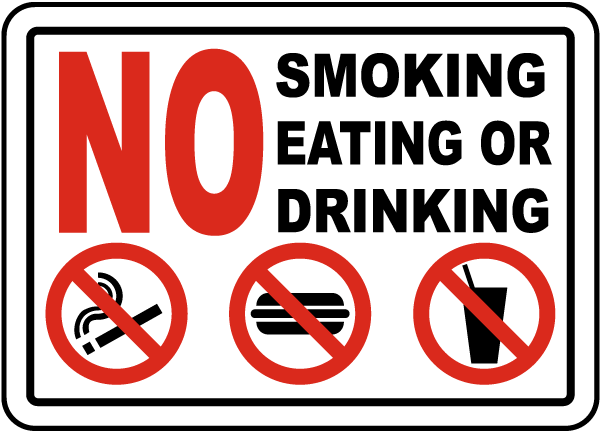 Figure: No smoking eating or drinking
- Smoking, eating, drinking, and chewing gum are prohibited in the laboratory at any time. Do not store food or drink in laboratory refrigerators.
- Keep hands and other objects away from your face, nose, eyes, ears, and mouth. The application of cosmetics in the laboratory is prohibited.
Maintain proper lab attire
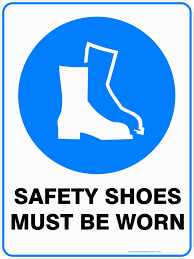 Figure: laboratory safety symbol
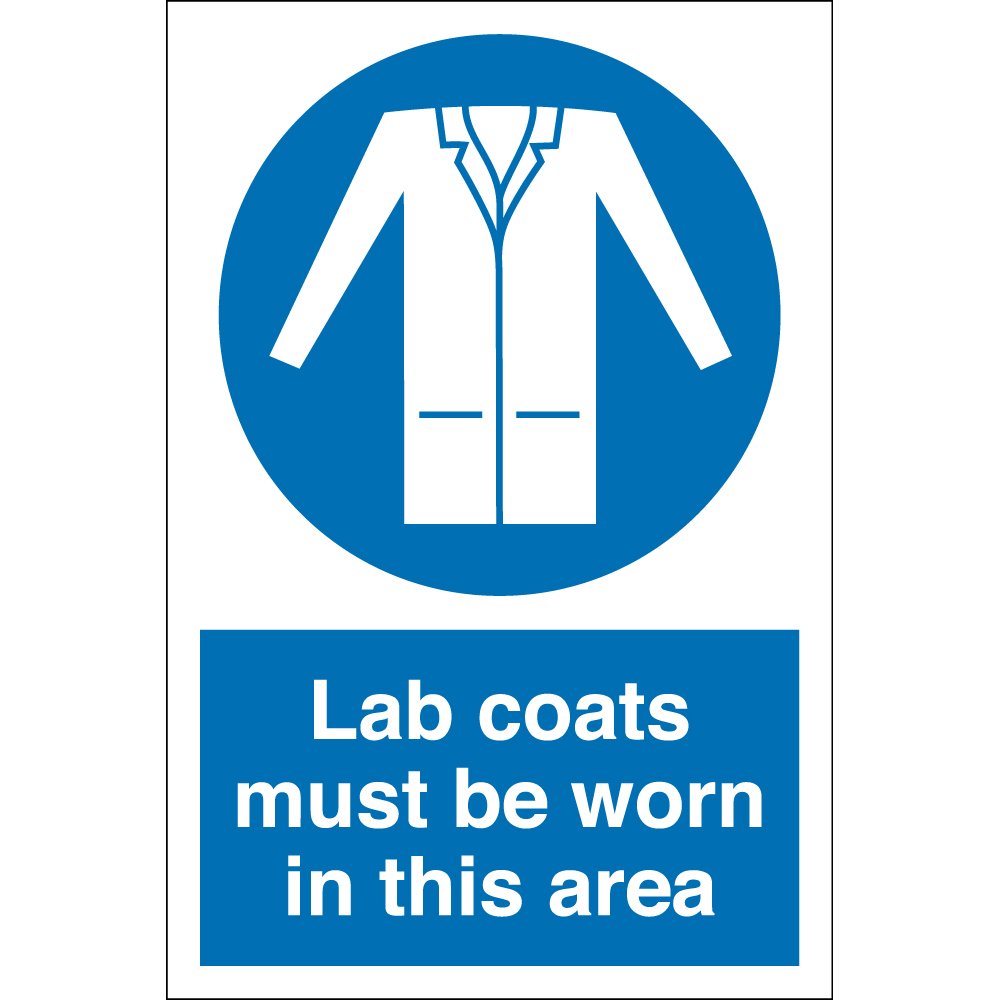 Figure: Wear Lab Coats
- Only closed-toe shoes are to be worn in the laboratory. Sandals or open-toed or canvas shoes are not permitted because of the constant danger of cuts and infections from broken glass found on the lab floors and the possibility of chemical spills.
- Laboratory coats must be worn and buttoned while in the laboratory. Laboratory coats should not be worn outside the laboratory.
- Wear gloves for any procedure involving contact with specimens or infectious material. Do not wear gloves outside the laboratory or use them to touch phones, door handles, or shared keyboards.
- Wear protective eyewear when handling liquid cultures, when a procedure may splash, and whenever local policy requires it. Face protection is not required for work performed inside a biological safety cabinet.
- Long hair should be secured behind your head to minimize fire hazards or contamination of experiments.
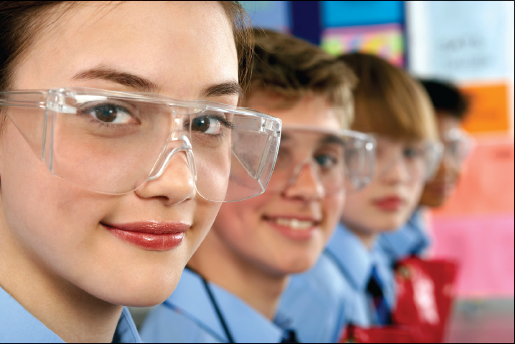 Figure: Wear protective eye wears (lab safety goggles)
The specific PPE required (whether gloves are sufficient or respiratory protection is needed, for example) depends on the biosafety level of the work being performed.
For how PPE requirements increase across BSL1, BSL2, and BSL3, see Biosafety Levels and Agents of Disease.
Biosafety
- Use appropriate universal precautions with all biological fluids.
- Treat all organisms as potential pathogens.
- Work areas/surfaces must be disinfected before and after use. Disinfect all contaminated wastes before discarding them.
- Flame transfer loops, wires, and needles before and after use, and let a flamed loop cool before touching it to a culture so material does not spatter and aerosolize. Disposable loops or a microincinerator remove this risk entirely and are preferred where available.
- Do not walk around the laboratory with transfer loops, wires, needles, or pipettes containing infectious material.
- Hands must be washed before leaving the laboratory.
The effectiveness of handwashing against ubiquitous environmental contamination is often demonstrated in first-year practical: a petri dish touched by a washed hand versus an unwashed hand shows the dramatic difference. Handwashing is not only about asepsis and keeping cultures pure. It is a personal safety measure. Any microorganism on your hands, if it contacts a break in your skin or reaches your mucous membranes, can establish infection. - Upon entering the laboratory, coats, books, and other paraphernalia, e.g., purses, briefcases, etc., should be placed in specified locations and never on benchtops (except for your lab manual).
- Dispose of waste in proper containers
- Report any broken laboratory equipment immediately, and report any broken glass, especially those containing infectious materials.
- Do not remove any materials from the laboratory without the written permission of the course instructor or TA.
Restricted access and the working environment
Most clinical and diagnostic microbiology laboratories operate at BSL2 by default, so the access and signage controls below are standard practice. In a BSL1 teaching lab the requirements are lighter, and biohazard signage is not required. For how these controls scale with biosafety level, see Biosafety Level 1 (BSL1) and Biosafety Level 2 (BSL2) Guidelines.
- Display the biohazard warning sign on the laboratory door, with the biosafety level and the responsible person's name and contact.
- Allow only authorized persons into working areas; keep laboratory doors closed and lock the room, freezers, and refrigerators when not in use.
- Keep the bench free of anything not needed for the current task.
Controlling aerosols
Aerosols are the single most important route of laboratory-acquired infection, and the one students never see coming because there is nothing to clean up.
- Assume that opening a plate or tube, flaming a loaded loop, uncapping after centrifugation, vortexing, and pipetting all generate invisible aerosols.
- Perform all work that can aerosolize infectious material inside a biological safety cabinet, not on the open bench.
- Cool a hot loop before touching it to a culture, or use disposable loops, so material does not spatter.
- Let a centrifuge come to a complete stop on its own before opening the lid.
- Never sniff a culture plate to help identify an organism.
Preventing aerosol generation is foundational here because aerosol inhalation is the primary occupational exposure route in a microbiology lab. You can control splashes and spills if you see them; you cannot control an aerosol you've already breathed in. This is why aerosol-generating procedures require additional containment at BSL2 and above.
Chemical safety
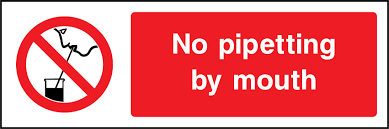 Figure: No mouth pipetting
Never pipette anything by mouth as chemicals or infectious materials can be accidentally ingested. Always use pipetting devices.
When handling chemicals, note the hazard code on the bottle and take the appropriate precautions.
Never pour chemicals or untreated biohazardous fluids down the sink. Liquid infectious waste may be discharged to drain only after chemical disinfection.
Return all chemicals, reagents, cultures, and glassware to their designated places.
Safe handling of equipment
- Always clean the lenses of your microscope before putting them away. Use the appropriate tissue paper and cleaning solution for this purpose.
- Glassware should be washed with soap and water, then rinsed with distilled water.
Spills and decontamination
- Know the location of the spill kit, eyewash station, emergency shower, and first-aid box before you start work.
- For a biological spill: cover it with absorbent paper, apply disinfectant from the outside edges inward, allow the recommended contact time, then clear and discard the material as biohazard waste.
- Decontaminate all cultures, contaminated materials, and biohazardous liquids (autoclave or approved chemical treatment) before disposal or reuse. Cultures never go into general waste untreated.
Fire Safety
- Learn to use fire safety equipment, such as fire extinguishers, emergency blankets, etc., to put out the fire.
- Take care around Bunsen burners. A fully aerated flame is almost invisible in bright light, so treat any lit burner as a hazard even when you cannot see the flame.
- Turn off Bunsen burners and gas taps before leaving the laboratory
- Familiarize yourself with safety equipment in the laboratory and emergency escape routes.
Reporting the Accidents: Sharps, exposures, and medical surveillance
If you are injured in the laboratory, immediately contact your course instructor or teaching assistant (TA). Spills, cuts, and other accidents should be reported to the instructor or TA in case further treatment is necessary.
- Discard needles, blades, and broken glass into a puncture-proof sharps container. Do not recap needles. If recapping is unavoidable, use the one-handed scoop technique or a mechanical recapping device, never two hands.
- After a needlestick or a splash to the eye, mouth, or broken skin: wash or irrigate immediately, then report at once so post-exposure evaluation can begin without delay.
- Personnel handling blood and infectious material should have appropriate immunization (for example hepatitis B) and, where indicated, baseline serology and medical follow-up.
- Record every spill, exposure, and injury in writing, not just verbally.
Key Exam Facts in One Table
| Rule category | Foundational practice | Why it matters |
|---|---|---|
| Hand hygiene | Correct handwashing before and after gloves, before leaving lab | Gloves provide a barrier but can have undetected holes; hands are the most direct contact route between lab and your mucous membranes |
| PPE | Lab coat, gloves, eye protection, closed-toe shoes, always | Different organisms require different PPE levels, but basic PPE is non-negotiable baseline in any lab |
| Aerosol prevention | Never sniff plates; let centrifuges stop before opening; cool loops or use disposable loops; use a BSC for aerosol-generating procedures | Aerosol inhalation is the primary occupational exposure route; you cannot see or control an aerosol once released |
| Waste decontamination | Autoclave all contaminated materials before disposal | Dead organisms are less hazardous than live ones, but improper decontamination can release organisms during handling |
| No eating/drinking/smoking | Applies in all labs, all times | Direct ingestion route is the fastest way to establish infection; contamination on hands transfers to food |
| Injury reporting | Must be reported immediately, even minor cuts | Occupational exposures are often minor punctures or small wounds; early reporting enables prompt medical intervention |
| Biohazard labeling | All potentially contaminated materials must be labeled | Clear labeling prevents accidental exposure by someone unfamiliar with the contents |
How to Remember
- The "ubiquitous contamination" principle: Every surface in a microbiology lab is contaminated. You are contaminated. Your clothes shed microorganisms. The air is full of spores. These rules exist because you cannot see the contamination, so you must assume it's always there and practice accordingly.
- Handwashing as the single most effective defense: It's not glamorous, but it's the reason microbiology lab workers don't routinely come home with occupational infections despite working with pathogens. Gloves fail. PPE fails. But you can't fail at washing your hands if you do it correctly.
- "No eating" isn't an inconvenience, it's the line between infection and non-infection: If you eat a sandwich contaminated with Salmonella, you get gastroenteritis. If you eat that same sandwich after it's been on a lab bench, you bring the organism home with you. One rule separates the two scenarios.
- Waste disposal as a "last chance" containment: If all the PPE and handwashing and spillage protocols work, contaminated waste is the final thing that can leak back out. Proper autoclaving and disposal closes that loop.
Where Students Get Confused
- Thinking gloves mean you don't need to wash your hands. Gloves are a barrier, not a replacement for handwashing. If a glove has a micro-hole and contaminated material contacts your skin, or if you touch your face while still wearing the glove, you've introduced the organism. Handwashing after glove removal is mandatory.
- Assuming that because you can see the lab is clean, it is clean. A visibly clean bench is full of spores and bacteria invisible to the naked eye. Ubiquitous contamination is the entire premise of these rules; you must assume contamination is present even when you can't see it.
- Not understanding why "no eating" applies even in a teaching lab with non-pathogenic organisms. Teaching labs with E. coli K-12 (non-pathogenic) still follow no-eating rules, partly as habit reinforcement, partly because contamination can never be assumed to be completely non-pathogenic (stray organisms from other benches, from the air, cross-contamination). The rule is universal because the risk is universal.
- Thinking "I was quick" or "just this once" is a valid exception. All the documented occupational infections in microbiology labs started with "just this once." Rules exist because the cost of a single breach is an infection that could hospitalize you or worse.
- Underestimating the importance of spill cleanup. Spills aren't just messes; they're the moment an organism that was contained in a tube is now aerosolized and spreading. Correct cleanup procedure is not optional; it's a critical containment step.
- Not reporting minor injuries because they "seem small." Many occupational infections started from a tiny needle stick or paper cut that was never reported and never treated. Early reporting enables medical follow-up and prophylaxis if needed.
References
- U.S. Department of Health and Human Services, CDC and NIH. Biosafety in Microbiological and Biomedical Laboratories (BMBL). 6th ed. Atlanta, GA: CDC; 2020.
- World Health Organization. Laboratory Biosafety Manual. 4th ed. Geneva: WHO; 2020.
- Cheesbrough M. District Laboratory Practice in Tropical Countries, Part 1. 2nd ed. Cambridge: Cambridge University Press; 2009.
- National Public Health Laboratory, Department of Health Services, Nepal. Standard Operating Procedure for Bacteriology: Good Microbiological Practices. Version 2.0. 2024.
- Ribes R, Iannarelli P, Duarte RF. Laboratory Safety and Biohazards. In: English for Biomedical Scientists. Springer; 2009. p. 210–222.

Comments
No comments yet. Be the first to share your thoughts.
Leave a comment
All comments are reviewed before they appear.