
Virology MCQs: Clinical and Applied Virology (With Answers and Explanations)
Ten clinical virology MCQs with answers and explanations: viral aseptic meningitis, influenza antivirals, hepatitis B vaccine and neonatal transmission, HIV testing, RSV, and herpes reactivation.

On this page
Ten multiple choice questions covering clinical and applied virology, from viral meningitis and antiviral drugs to neonatal hepatitis B, HIV testing, and herpes reactivation, with a full answer key and explanations at the end. Write down your answers first, then check them against the key.
- Most common cause of viral aseptic meningitis
What is the most common cause of aseptic meningitis of viral etiology?
a. Enteroviruses
b. Herpesviruses
c. Arboviruses
d. Retroviruses
e. Orthomyxoviruses - Antiviral drug against influenza A
Protection against influenza A virus in a nonimmune individual can be achieved through the administration of a drug that interferes with:
a. Viral endonuclease activity
b. Binding of host messenger RNA (mRNA) caps by the viral P1 protein
c. Synthesis of viral progeny RNA
d. Uncoating of nucleic acid
e. Viral adsorption and penetration
- Immunization given immediately after birth
Which one of the following immunizations should be administered immediately after birth?
a. Diphtheria-pertussis-tetanus (DPT) vaccine
b. Haemophilus influenzae type b vaccine
c. Hepatitis B vaccine
d. HIV vaccine
e. Oral poliovirus vaccine - Neonatal transmission of hepatitis B
Which one of the following routes is most often involved in the neonatal transmission of hepatitis B virus (HBV)?
a. Blood transfusion
b. Fetal contact with infected blood during childbirth
c. Ingestion of the virus via maternal breast milk
d. Transmission of the virus from hospital personnel during childbirth
e. Transplacental transmission of the virus - Multinucleated cells in bronchial secretions
The finding of large, multinucleated clumps of cells in the bronchial secretions of a 2-year-old girl with acute bronchopneumonia suggests that this infection is caused by:
a. Bordetella pertussis
b. Epstein-Barr virus
c. Mycoplasma hominis
d. Rhinovirus
e. Respiratory syncytial virus (RSV) - Acid stability of picornaviruses
All of the following picornaviruses are resistant to the acidity of the stomach except:
a. Coxsackievirus A
b. Coxsackievirus B
c. Echovirus
d. Poliovirus
e. Rhinovirus - Next step after a repeatedly positive HIV screen
A divorced mother of four tests positive for HIV-1 infection during investigation of a febrile illness with disseminated lymphadenopathy. A second enzyme immunoassay (EIA) is performed and the result is the same. The woman denies intravenous drug use. What is the appropriate next step in the management of this patient?
a. Treatment with zidovudine (azidothymidine, AZT)
b. All the patient's close contacts should be tested for HIV antibodies
c. The public health authorities should be notified
d. A confirmatory test (Western blot or immunoblot) should be ordered
e. The patient should be reassured and told that her disease is probably unrelated to AIDS - Marker of high infectivity in a hepatitis B carrier
In a chronic carrier of hepatitis B virus (HBV), which positive test is most indicative of high infectivity?
a. Hepatitis B surface antigen (HBsAg)
b. Hepatitis B core antigen (HBcAg)
c. Hepatitis B e antigen (HBeAg)
d. Anti-HBs
e. Anti-HBe - A slow-transforming retrovirus
A retrovirus is found in a high proportion of laboratory animals of a given species. Most viremic animals are asymptomatic, but some develop a fatal wasting syndrome, and a few develop leukemia and other tumors after long periods of latency. The virus in question most likely lacks which one of the following genes?
a. gag
b. pol
c. env
d. onc - Recurrent genital vesicles
A sexually active 22-year-old college student presents with a localized vesicular eruption on the shaft of his penis. A scraping of the base of one vesicle is positive for Tzanck cells. He reports a similar eruption in the same area 2 months earlier. The reappearance of this eruption may be explained by:
a. Cell-mediated immunity (CMI) deficiency in the patient
b. A prolonged period of viremia following the initial infection
c. A second infection with a similar virus of a different serotype
d. Failure to comply with therapy prescribed at the initial episode
e. Reactivation of a latent infection
Answer key
- a. Enteroviruses
- d. Uncoating of nucleic acid
- c. Hepatitis B vaccine
- b. Fetal contact with infected blood during childbirth
- e. Respiratory syncytial virus (RSV)
- e. Rhinovirus
- d. A confirmatory test (Western blot or immunoblot) should be ordered
- c. Hepatitis B e antigen (HBeAg)
- d. onc
- e. Reactivation of a latent infection
Why these are the answers
- Enteroviruses. Aseptic meningitis means meningitis with a negative routine bacterial culture, and most cases are viral. Enteroviruses (coxsackieviruses, echoviruses, and the numbered enteroviruses) are the most common cause, especially in summer and early autumn. Herpesviruses and arboviruses also cause central nervous system disease, but they are far less common causes of the typical benign aseptic meningitis, and orthomyxoviruses (influenza) and retroviruses are not usual causes.
- Uncoating of nucleic acid. The drug described is amantadine (or rimantadine), which blocks the M2 ion channel of influenza A. M2 normally lets protons into the virion to acidify it, and that acidification is what triggers uncoating and release of the genome inside the cell. Block M2, and the virus cannot uncoat. Note the practical caveat: amantadine is no longer recommended for influenza because nearly all circulating strains are now resistant, but as a mechanism it remains a classic teaching point. The other options describe genuine antiviral mechanisms, but not amantadine's.
- Hepatitis B vaccine. The World Health Organization recommends that every infant receive the first dose of hepatitis B vaccine as soon as possible after birth, preferably within 24 hours, because early vaccination prevents mother-to-child transmission and lifelong carriage. The first doses of DPT, Hib, and inactivated polio vaccine are given later (around 6 weeks to 2 months of age), and there is currently no HIV vaccine.
- Fetal contact with infected blood during childbirth. Most mother-to-child (perinatal) HBV transmission happens at delivery, when the newborn is exposed to the mother's infected blood and secretions. Transplacental (in utero) transmission is uncommon, and breast milk is not the main route. This timing is exactly why the combination of hepatitis B vaccine and hepatitis B immune globulin, given to the newborn right after birth, is so effective: it protects the baby at the moment of highest exposure.
- Respiratory syncytial virus (RSV). RSV is the leading cause of bronchiolitis and pneumonia in infants and young children, and it causes infected cells to fuse into large multinucleated masses called syncytia, which is where the virus gets its name. Finding these syncytial cells in the respiratory secretions of a sick toddler points directly to RSV. The other agents do not produce this characteristic multinucleated cell picture in this setting.
- Rhinovirus. Enteroviruses (poliovirus, the coxsackieviruses, and echoviruses) are acid-stable, so they survive passage through the stomach to reach and infect the intestine. Rhinovirus, although it is also a picornavirus, is acid-labile: it is destroyed by stomach acid, which is one reason it stays in the cooler, non-acidic environment of the nose and causes the common cold rather than gut infection. So rhinovirus is the exception in this list.
- A confirmatory test (Western blot or immunoblot) should be ordered. A positive HIV screening immunoassay, even when repeated, must be confirmed with a more specific confirmatory test before the diagnosis is made or acted upon, because screening assays can give false positives. Only after confirmation would treatment, partner notification, or counseling proceed. This is why starting AZT, notifying authorities, testing contacts, or reassuring the patient are all premature at this step. Modern testing algorithms have largely replaced the Western blot with an antigen/antibody combination assay followed by an HIV-1/HIV-2 differentiation assay, but the principle is unchanged: a reactive screen requires confirmation.
- Hepatitis B e antigen (HBeAg). In a chronic HBV carrier, a positive HBeAg indicates active viral replication and a high level of circulating virus, which means high infectivity. HBsAg confirms that the person is infected or a carrier but does not by itself indicate how infectious they are, and the antibodies (anti-HBs, anti-HBe) indicate reduced replication or recovery. So among these, HBeAg is the marker of high transmissibility.
- onc. This describes a slow-transforming (non-acute) retrovirus: it spreads widely and most animals stay well, but a few develop tumors only after long latency. Such viruses are replication-competent, so they must have intact gag, pol, and env genes (the structural, enzyme, and envelope genes needed to make complete virus). What they lack is a viral oncogene (onc). Acutely transforming retroviruses, by contrast, carry a captured oncogene and cause tumors quickly, but are often replication-defective. Wide spread plus rare, slow tumors is the fingerprint of a virus without onc.
- Reactivation of a latent infection. The vesicles, the Tzanck-positive scraping (which shows the multinucleated giant cells of herpesvirus infection), and the earlier identical episode in the same site all point to genital herpes simplex. After the first infection, HSV becomes latent in the sacral sensory ganglia and periodically reactivates, traveling back down the nerve to produce recurrent lesions in the same area. Recurrence is a feature of the virus's latency, not a sign of immune deficiency, reinfection, or treatment failure.
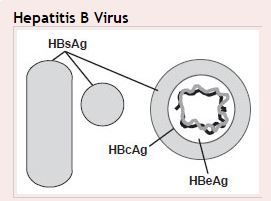
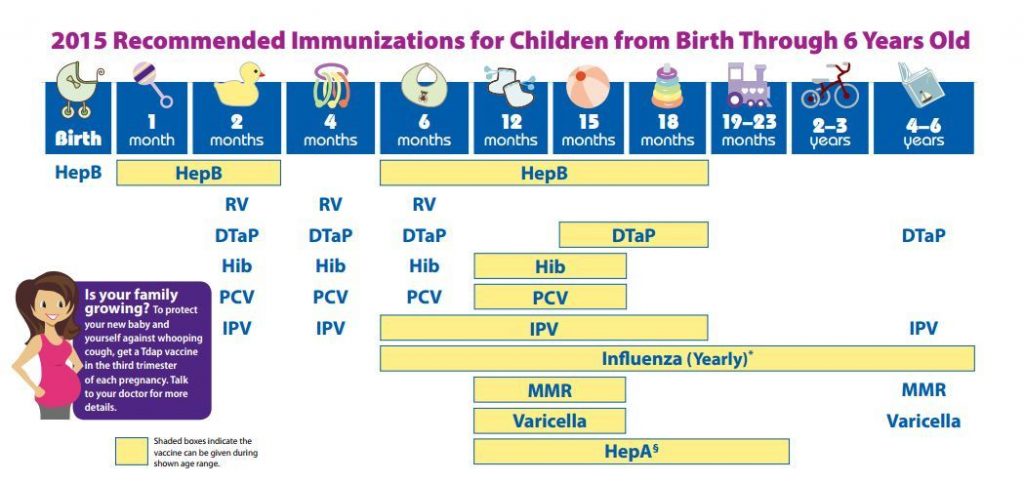 Figure: Recommended Immunizations for Children from Birth Through 6 Years Old (Image source: CDC)

Tankeshwar Acharya, MSc (Medical Microbiology)
Tankeshwar Acharya is an Assistant Professor in the Department of Microbiology at Patan Academy of Health Sciences (PAHS), Nepal, where he has been teaching and practicing clinical microbiology for over 14 years. He is the founder of Microbe Online, one of the leading free microbiology education resources on the web, covering bacteriology, mycology, parasitology, immunology, and clinical laboratory diagnostics written from direct experience in both the classroom and the diagnostic laboratory.
Comments
No comments yet. Be the first to share your thoughts.
Leave a comment
All comments are reviewed before they appear.