
Hookworm: Ancylostoma duodenale vs Necator americanus, Life Cycle, and Lab Diagnosis
Hookworm disease explained: how Ancylostoma duodenale and Necator americanus differ, why the infection causes iron-deficiency anemia, the life cycle from skin to lung to gut, laboratory diagnosis, and treatment.

On this page
A 6-year-old girl in a rural farming community presents with pallor, lethargy, and poor concentration at school. Her hemoglobin is 7.2 g/dL (severe anemia). There is no history of visible blood loss, no melena, no hematuria. Her mother mentions the child often plays barefoot in the fields near where the family practices open defecation.
The connection between bare feet in contaminated soil and severe anemia months later is not obvious and that is exactly why hookworm remains one of the most underdiagnosed causes of iron-deficiency anemia in children worldwide. A larva no more than half a millimeter long penetrates intact skin, migrates silently through the bloodstream and lungs, and ultimately attaches to the small intestine where it feeds on blood for years. Understanding this journey, from soil to skin to gut, is what allows a clinician to recognize hookworm disease in a patient who has never knowingly been "bitten" by anything.
Hookworm species have a worldwide distribution, with two species known to infect humans: Ancylostoma duodenale and Necator americanus. They are the second most common helminthic infection reported in humans. Other soil-transmitted helminths, roundworm (Ascaris lumbricoides) and whipworm (Trichuris trichiura) are the first and second most prevalent helminthic infections.
The greatest number of hookworm cases occur in Asia, followed by sub-Saharan Africa. N. americanus is the most common hookworm worldwide, whereas A. duodenale is more geographically restricted. Iron-deficiency anemia and protein-energy malnutrition from blood loss are the two major manifestations of hookworm infections.
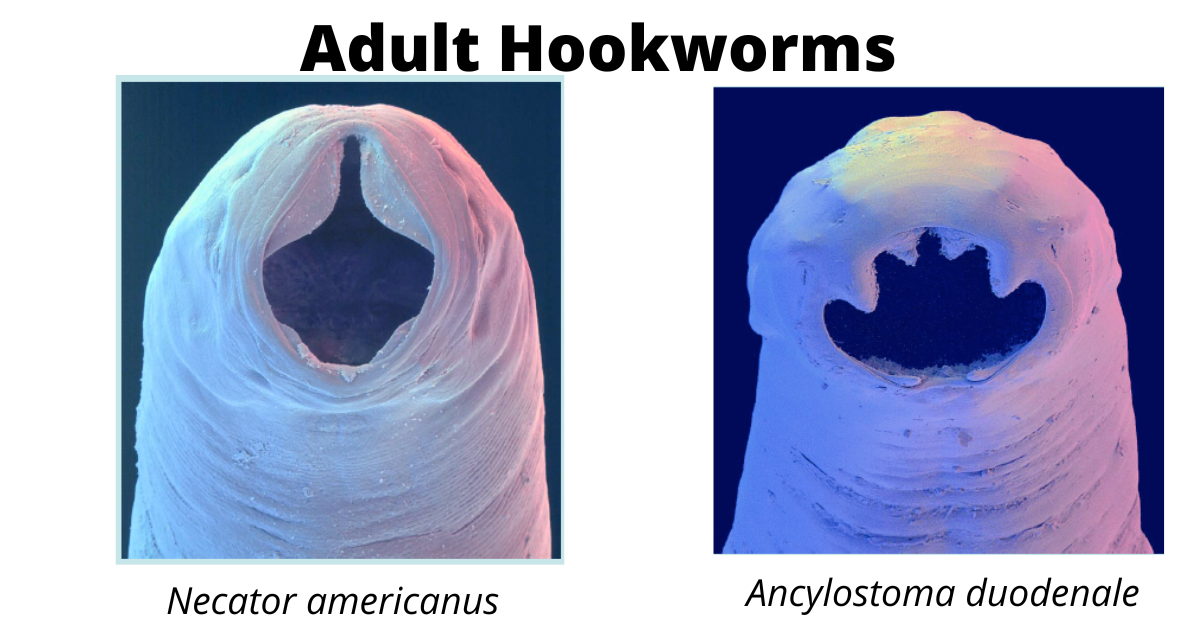 Figure: Hookworm (Necatar americanus and Ancylostoma duodenale) mouth parts)
The eggs and rhabditiform larvae of the two species are indistinguishable. Differentiation of the species is based on the morphology of the buccal capsule and the adult male copulatory bursa.
Why Hookworm Causes Anemia
Hookworm disease is fundamentally a disease of chronic, low-grade intestinal blood loss, and understanding the mechanism explains both the clinical presentation already described in this article and why species matters.
Adult worms attach to the intestinal mucosa using either teeth (A. duodenale) or cutting plates (N. americanus) and feed directly on blood. Each worm causes continuous microhemorrhage at its attachment site, and worms also secrete anticoagulant proteins that prevent the bite wound from clotting, prolonging blood loss even after the worm moves to a new attachment site.
The blood loss is per-worm and cumulative. A single worm causes a small, almost negligible amount of blood loss. But infections are rarely caused by a single worm — they accumulate over months to years of repeated soil exposure, and the cumulative effect of hundreds of worms, each independently causing chronic microhemorrhage, is what produces the iron-deficiency anemia described in the Hematologic row of the clinical manifestations table above.
Why species matters for severity: A. duodenale causes substantially more blood loss per worm than N. americanus. Clinical studies using PCR-based quantification have found A. duodenale infections cause 2 to 10 times more blood loss than equivalent N. americanus burdens. This is the biological basis for the per-worm blood loss difference in the species comparison table, with A. duodenale causing roughly 0.15 mL per worm per day against about 0.03 mL for N. americanus, so a heavy A. duodenale infection can produce total daily losses of the order of 10 to 20 mL. and it means a patient with A. duodenale infection is at higher risk of severe anemia even at a similar worm burden, despite A. duodenale's shorter lifespan.
Why children are hit hardest: Children have smaller iron reserves and higher iron requirements for growth, making them disproportionately vulnerable to the same worm burden that an adult might tolerate with only mild anemia. This is why hookworm-attributable iron-deficiency anemia is concentrated in pre-school and school-age children in endemic regions, with documented effects on growth and cognitive development, directly explaining the "Growth and Mental Retardation" consequence already listed in this article.
Life Cycle
Hookworms are found in areas with moist, warm soil capable of supporting the parasite’s life cycle. Soil becomes infectious around 5-10 days after contamination and remains so for 3-4 weeks, depending on conditions.
Hookworm infection is mainly acquired by walking barefoot on contaminated soil through direct skin penetration by filariform larvae. Ancylostoma duodenale can also be transmitted through the ingestion of larvae.
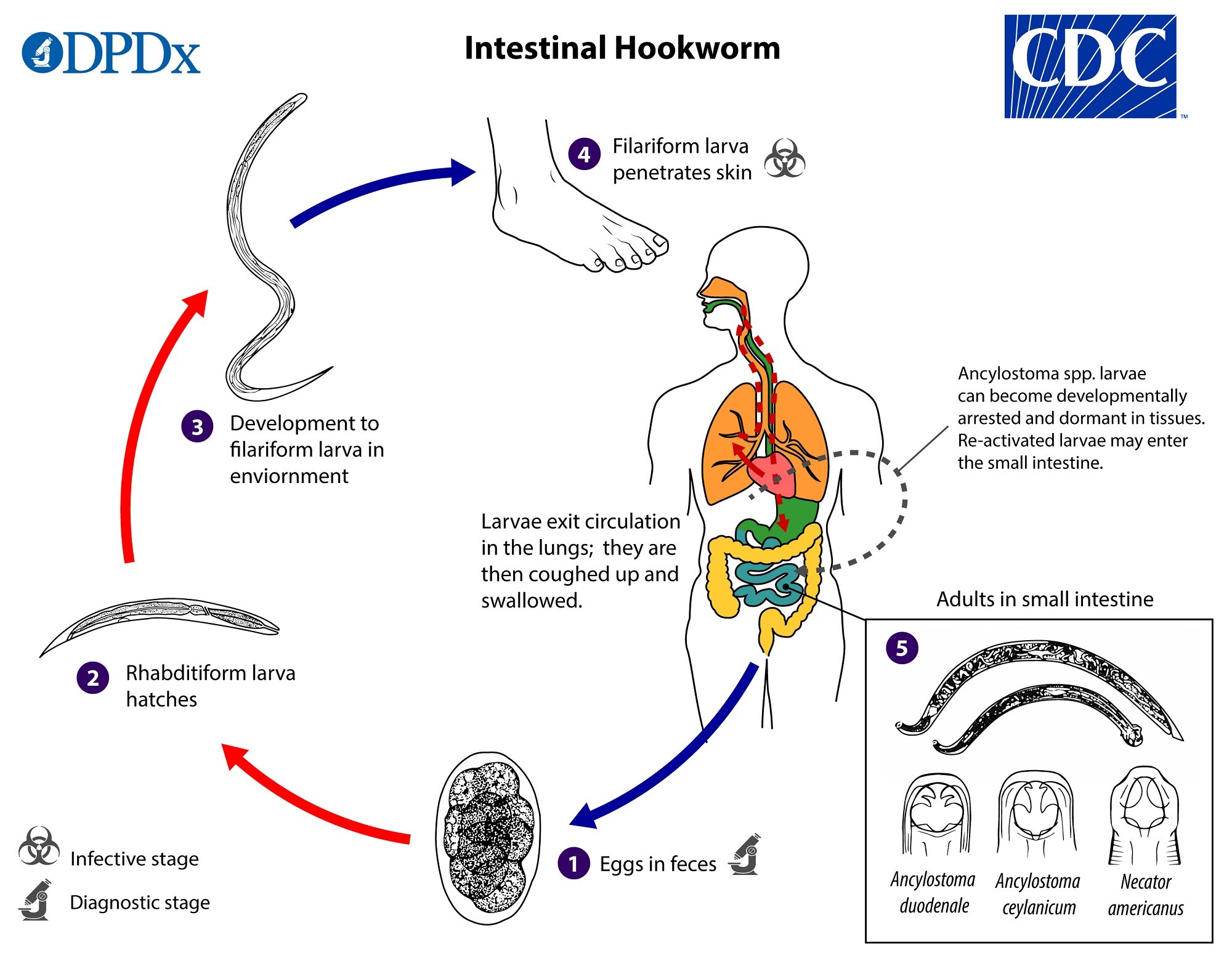 Figure: Life cycle of Hookworm (Image source: CDC)
Eggs are passed in the stool.
If there is a practice of open defecation (defecation in fields, bushes, near water bodies, or other open spaces) or if the feces of infected persons are used as fertilizer, eggs get deposited on soil.
Under favorable conditions (moisture, warmth, shade), larvae hatch in 1 to 2 days and become free-living in contaminated soil. These released rhabditiform larvae grow in the feces and/or the soil.
After 5 to 10 days (and two molts), the noninfective rhabdifiform larvae will mature into infective filariform larvae (third-stage larvae). These infective larvae can survive 3 to 4 weeks in favorable environmental conditions.
On contact with the human host, typically bare feet, the infective filariform larvae penetrate the skin and enter the circulation.
Humans acquire hookworm when third-stage infective larvae in soil either penetrate the skin (as do both N. americanus and A. duodenale) or when they are ingested (A. duodenale only).
Larvae exit circulation in the lungs coughed up and swallowed. Reach intestine, mature, and lay eggs.
The larvae are carried through the blood vessels to the heart. The larvae can break through the capillaries and enter the host’s lungs. They penetrate the pulmonary alveoli, migrate up the bronchial tree to the pharynx, and are swallowed.
Upon entering the digestive system, the larvae attach to the mucosa of the small intestine. Here they secrete anticoagulants, ingest blood as their source of nourishment, and mature into adults. Adult worms live in the lumen of the small intestine, typically the distal jejunum.
The worms mature, and eggs are passed in the feces. About 5 weeks after infection, the worms attain sexual maturity, fertilization occurs, and females lay eggs that are passed along with the feces. Egg output is species-dependent, with Ancylostoma duodenale females laying more eggs per day than Necator americanus (see the species comparison below).
Most adult worms are eliminated in 1 to 2 years, but the longevity may reach several years.
Clinical Manifestations
Most people infected with hookworms have no symptoms, but some may develop epigastric pain, diarrhea, anorexia, and eosinophilia. People who are infected for the first time may have gastrointestinal symptoms. Repeated exposure to third-stage larvae of hookworm results in a local pruritic, erythematous, papular rash known as “ground itch” at the site of larval penetration.
Two severe consequences of hookworm infections are;
- Anemia: The most serious effects of hookworm infection are blood loss, anemia, and protein loss.
- Growth and Mental Retardation: When many worms continuously infect children, the loss of iron and protein can retard growth and mental development.
Major clinical features of hookworm infections are tabulated here:
| Site | Symptoms | Pathogenesis |
|---|---|---|
| Dermal | Local erythema, macules, papules (ground itch) Creeping eruption | Cutaneous invasion and subcutaneous migration of larva |
| Pulmonary | Bronchitis, pneumonitis, and, sometimes, eosinophilia | Migration of larvae through lung, bronchi, and trachea |
| Gastrointestinal | Anorexia, epigastric pain, and gastrointestinal hemorrhage | Attachment of adult worms and injury to the upper intestinal mucosa |
| Hematologic | Iron deficiency, anemia, hypoproteinemia, edema, cardiac failure | Intestinal blood loss |
Laboratory Diagnosis
Sample: Stool, duodenal content, blood (to ascertain the nature of anemia and the presence of eosinophilia)
Microscopy
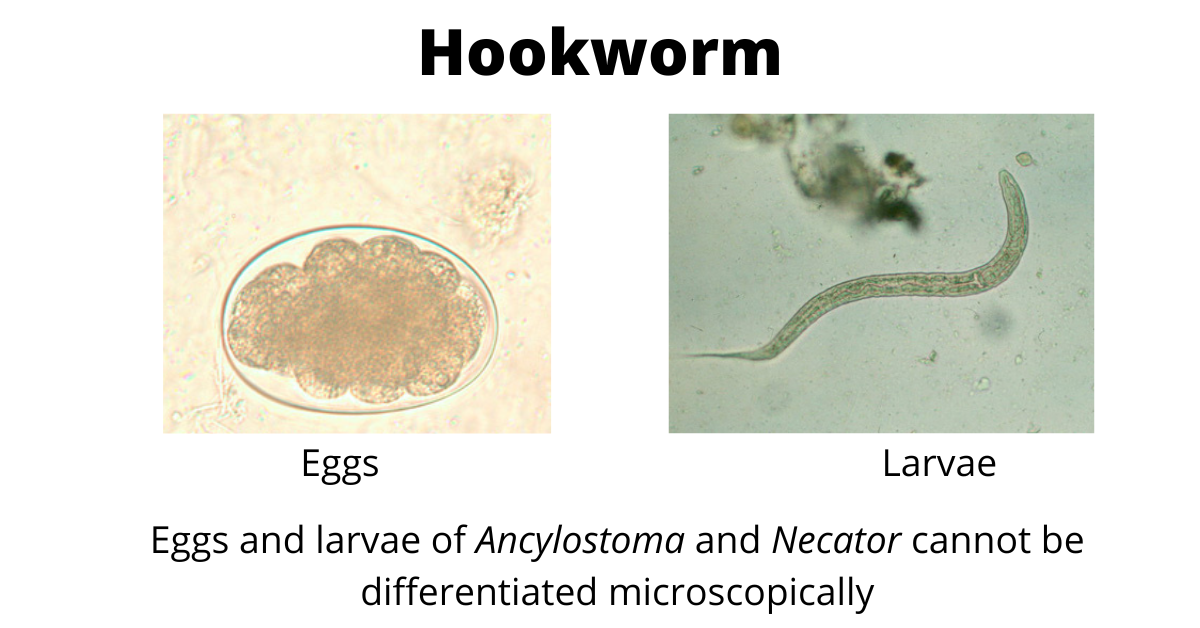
Hookworms are typically diagnosed by eggs or rhabditiform larvae found in stool specimens. Finding hookworm eggs on direct stool smear is problematic in light infections, so the concentration method is recommended. Ether concentration, FLOTAC, and Kato-Katz techniques are used to increase the diagnosis of hookworm infections. Species of hookworms cannot be distinguished by egg or larvae morphology. The eggs and larvae of the two species are indistinguishable.
 Eggs
Eggs
The eggs are oval, thin-shelled, and contain a visible embryo at the four-to-eight-cell stage. There is a characteristic clear space between the shell and the developing embryo.
Larvae
The rhabditiform larvae are typically 250 to 300 μm with a long buccal capsule and an inconspicuous genital primordium. The larger filariform larvae are approximately 500 μm, with a pointed tail and an esophageal-to-intestinal ratio of 1:4.
The rhabditiform and filariform larvae must be differentiated from those of Strongyloides stercoralis. The most useful feature on direct microscopy is the buccal cavity: the hookworm rhabditiform larva has a long buccal cavity, whereas the Strongyloides rhabditiform larva has a short one. Strongyloides larvae also have a more prominent genital primordium. This distinction matters because the two infections are treated differently, and it links to the co-infection caution in the treatment section.
Adults
Adult female hookworms measure up to 15 mm and males up to 10 mm in length. The anterior end is bent slightly dorsally, hence called hookworm. The mouth is large, and buccal capsule is equipped with four teeth on the ventral surface and a pair of smaller teeth on its dorsal surface
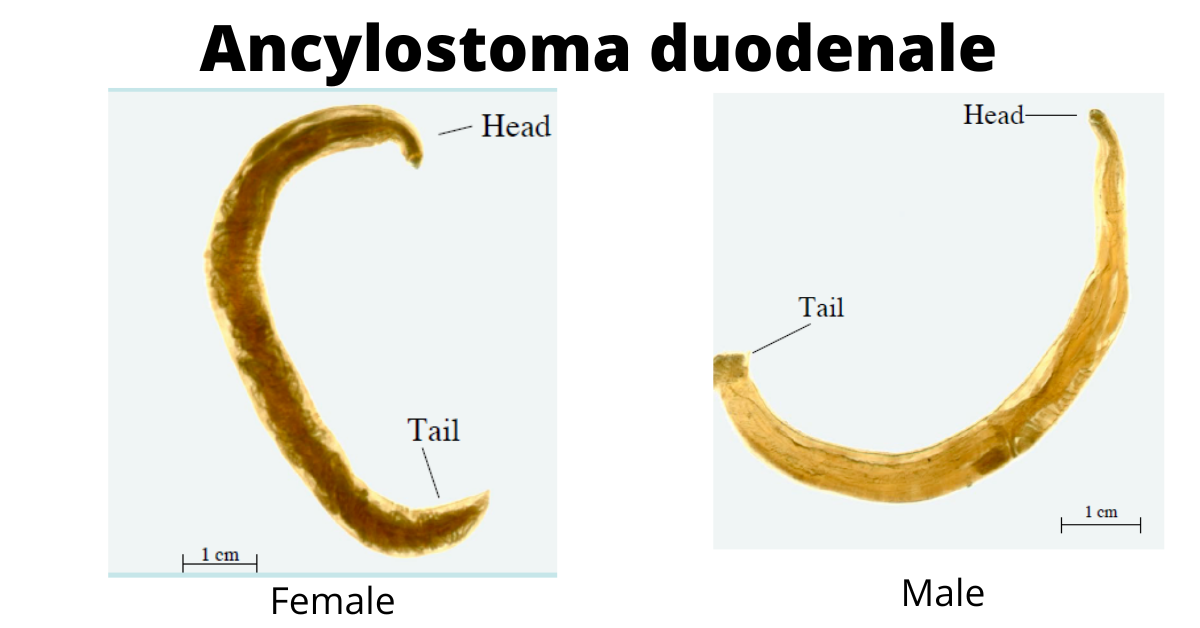 Figure: Female (left) and male (right) Ancylostoma duodenale
- Male: the posterior end is expanded into a copulatory bursa containing two copulatory spicules supported by fleshy rays. The expanded umbrella-like pattern of the posterior end is the characteristic feature of the male worm.
- Female: the hind end is coiled with a subterminal anus situated ventrally
Harada-Mori culture
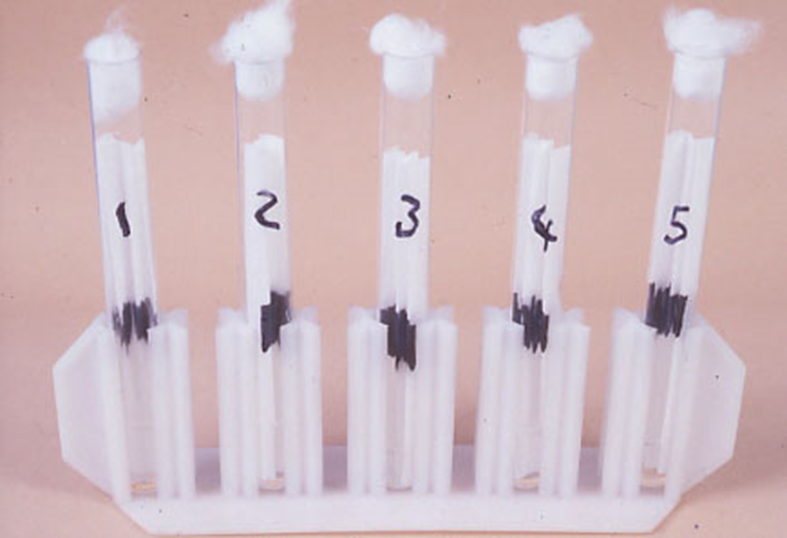 Figure: Harada-Mori culture
Rearing filariform larvae in a fecal smear on a moist filter paper strip for 5 to 7 days) to identify the species of nematode involved.
Treatment
The standard treatment is a benzimidazole anthelmintic, either albendazole or mebendazole. Iron supplementation is required in patients with significant anemia and may need to continue for months to fully replenish iron stores even after the worms are cleared.
Important caution, co-infection with Strongyloides stercoralis: Because hookworm and Strongyloides share the same soil-transmission route and often co-exist in the same endemic populations, clinicians should consider co-infection, particularly before prescribing corticosteroids or other immunosuppressive therapy. Unlike hookworm, Strongyloides can cause life-threatening hyperinfection syndrome in immunosuppressed patients, and the standard hookworm treatment (benzimidazoles) is not the preferred treatment for Strongyloides, ivermectin is preferred. Empirically treating presumed hookworm with albendazole in a patient who also has unrecognized Strongyloides does not adequately address the more dangerous co-infection.
Prevention
Avoid contaminated soil (places with open defecation) and beaches. When traveling to a potentially contaminated area, wear appropriate footwear, such as enclosed shoes, and avoid other skin-to-soil contact forms. Communities can be protected by implementing effective sewage disposal systems. Currently, no preventive vaccine exists.
Types of Hookworms
Necator americanus and Ancylostoma duodenale are the significant hookworm species responsible for >90% of cases. Other species that can also cause infections are Ancylostoma ceylanicum, Ancylostoma braziliense, and Ancylostoma caninum.
Ancylostoma duodenale
Ancylostoma duodenale, Old World hookworm, is prevalent in southern Europe, Northern Africa, Southeast Asia, and South America. They attach to the intestinal mucosa by well-developed mouthparts, especially teeth.
Necatar americanus
Necatar americanus, New World hookworm, is prevalent in Africa, Southeast Asia, South and Central America, and the southeastern United States. They attach to the intestinal mucosa by well-developed cutting plates.
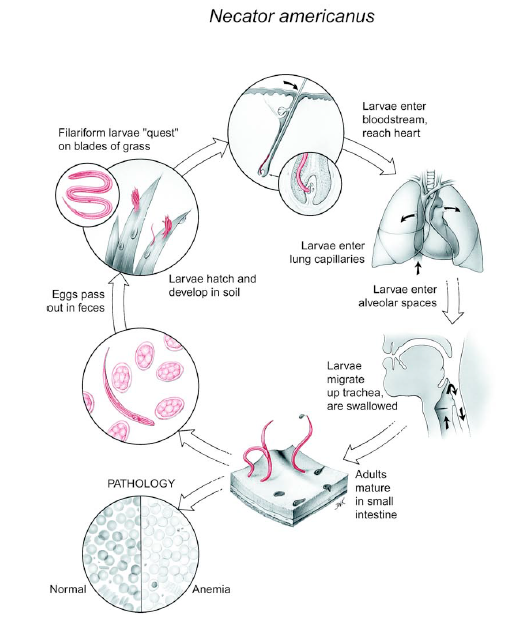 Figure: The Life cycle of Necator americanus
Differences between Ancylostoma duodenale and Necator Americanus
| Ancylostoma duodenale | Necator americanus | |
|---|---|---|
| Common name | Old World hookworm | New World hookworm |
| Size | Longer | Shorter |
| Blood loss (per worm) | About 0.15 mL/day, roughly 2 to 10 times more than Necator | 0.03 mL/day |
| Life Span | 1-2 years | 3-5 years or more |
| Egg production | 10,000 to 25000 /day | 5000 to 10,000/day |
| Mode of Transmission | Skin penetration and ingestion | Skin penetration only |
| Buccal capsule | Ancylostoma contains sharp teeth. | Necator contains cutting plates. |
Where Students Actually Get Confused
1. "Hookworm is only transmitted by skin penetration." This is true for Necator americanus, but Ancylostoma duodenale can also be transmitted by ingestion of larvae (e.g., on contaminated vegetables or in water). This dual route is a commonly tested point distinguishing the two species.
2. "Rhabditiform and filariform larvae are interchangeable terms for hookworm." They represent different developmental stages with different significance. Rhabditiform larvae are the non-infective, feeding form found in stool and soil shortly after eggs hatch. Filariform (L3) larvae are the infective, non-feeding form that develops after 5–10 days and two molts in the environment, this is the form capable of skin penetration, as already described in the life cycle above. Finding rhabditiform larvae in a stool sample confirms infection but is not the form responsible for transmission to new hosts.
3. "Hookworm larvae can be distinguished from Strongyloides larvae by size alone." The article notes that hookworm rhabditiform and filariform larvae "must be differentiated from S. stercoralis" but does not explain how. The key distinguishing feature: hookworm rhabditiform larvae have a long buccal cavity (already stated in the article's larvae description), while Strongyloides rhabditiform larvae have a short buccal cavity, this is the primary differentiating feature on direct microscopy. Additionally, Strongyloides larvae have a more prominent genital primordium. Misidentifying Strongyloides as hookworm has real consequences, see the treatment caution above.
4. "Eggs of A. duodenale and N. americanus can be told apart under the microscope." They cannot: hookworm eggs and rhabditiform larvae of the two species are morphologically indistinguishable. Species differentiation requires examining the buccal capsule (teeth in Ancylostoma vs cutting plates in Necator) of recovered adult worms, or Harada-Mori culture to rear filariform larvae for morphological comparison, or molecular methods (PCR).
5. "A heavy hookworm burden always causes obvious symptoms." Most infections are asymptomatic, particularly light infections, as already noted in the article. Iron-deficiency anemia develops gradually and silently over months as cumulative blood loss outpaces iron intake. A patient can have a clinically significant worm burden with no symptom beyond fatigue and pallor, which are easily attributed to other causes. This is precisely why hookworm is underdiagnosed: there is no acute, obviously infectious presentation pointing to the diagnosis.
How to Remember
Ancylostoma bites, Necator cuts. The two species attach differently: Ancylostoma has teeth, Necator has cutting plates. The alliteration holds it: Ancylostoma and "bite" both start hard, Necator and "cut" pair naturally. This is the single most tested difference between them.
A. duodenale is the more dangerous bleeder. Ancylostoma duodenale takes more blood per worm than Necator, and it can be swallowed as well as penetrate skin, so it is the more dangerous of the two despite living a shorter life. Pair "duodenale, dual route, more damage" together.
Old world versus new world. Ancylostoma duodenale is the Old World hookworm, Necator americanus the New World, and the "americanus" in the name is the reminder that Necator is the New World species.
The silent bleed. Hookworm anemia is cumulative and quiet: one worm loses a trickle, but hundreds over years drain enough iron to cause severe anemia with no dramatic bleeding. Picture a slow leak, not a wound.
Key Exam Facts
| Fact | Detail | Memory hook |
|---|---|---|
| Two major species | Ancylostoma duodenale, Necator americanus | >90% of cases combined |
| Global burden | ~500–740 million infected; up to 4.1 million DALYs/year | Leading cause of NTD morbidity |
| Infective stage | Filariform (L3) larva | Active skin penetration |
| Transmission: N. americanus | Skin penetration ONLY | "New World hookworm" |
| Transmission: A. duodenale | Skin penetration AND ingestion | Dual route, exam trap |
| Buccal capsule: Ancylostoma | Teeth (sharp) | "Ancylostoma bites" |
| Buccal capsule: Necator | Cutting plates | "Necator cuts" |
| Blood loss per worm: A. duodenale | About 0.15 mL/day per worm, 2 to 10 times more than Necator; heavy infection can total 10 to 20 mL/day | Higher anemia risk despite shorter lifespan |
| Blood loss per worm: N. americanus | 0.03 mL/day | Lower per-worm loss, but longer-lived |
| Lifespan: A. duodenale | 1–2 years | Shorter-lived |
| Lifespan: N. americanus | 3–5 years or more | Longer-lived |
| Egg output (overall) | 15,000–20,000 eggs/day per female | Species-specific rates also in comparison table |
| Time to sexual maturity | ~5 weeks after infection | Matches comparison table data |
| "Ground itch" | Local pruritic rash at site of larval skin penetration | First clinical sign |
| Pulmonary phase | Bronchitis, pneumonitis, eosinophilia | Larvae transit through lungs en route to intestine |
| Two severe consequences | Iron-deficiency anemia; growth/cognitive impairment in children | Cumulative chronic blood loss |
| Diagnosis | Stool eggs/larvae; concentration methods recommended for light infections | Direct smear insufficient for light infections |
| Species differentiation | NOT possible by egg/larva morphology | Requires adult buccal capsule or Harada-Mori culture |
| Must differentiate from | Strongyloides stercoralis larvae | Long buccal cavity (hookworm) vs short (Strongyloides) |
| Treatment | Albendazole or mebendazole + iron supplementation | Check for Strongyloides co-infection first |
Frequently Asked Questions
How does hookworm infection cause anemia?
Adult hookworms attach to the intestinal mucosa using teeth (Ancylostoma duodenale) or cutting plates (Necator americanus) and feed directly on blood, while secreting anticoagulant proteins that prolong bleeding. This causes chronic, cumulative intestinal blood loss across the worm burden, gradually depleting iron stores and producing iron-deficiency anemia, particularly in children with smaller iron reserves and higher growth-related iron requirements.
What is the difference between Ancylostoma duodenale and Necator americanus?
What is the difference between Ancylostoma duodenale and Necator americanus?
Ancylostoma duodenale has teeth and causes 2-10 times more blood loss per worm (10-20 mL/day) but lives only 1-2 years, while Necator americanus has cutting plates, causes less blood loss per worm (0.03 mL/day), but lives 3-5 years or more. A. duodenale can be transmitted by both skin penetration and ingestion; N. americanus is transmitted only by skin penetration. Their eggs and larvae are morphologically indistinguishable.
Why does hookworm infection cause respiratory symptoms?
How is hookworm species identified if eggs look the same?
Eggs and rhabditiform larvae of Ancylostoma duodenale and Necator americanus are morphologically indistinguishable. Species identification requires examining the buccal capsule of recovered adult worms (teeth in Ancylostoma vs cutting plates in Necator), using Harada-Mori filter paper culture to rear filariform larvae for comparison, or molecular methods such as PCR.
How is hookworm diagnosed in the laboratory?
How is hookworm diagnosed in the laboratory?
The usual method is finding hookworm eggs or rhabditiform larvae in a stool sample under the microscope. In light infections the eggs may be too few to see on a direct smear, so a concentration method is used to improve detection. The eggs and larvae of the two hookworm species cannot be told apart, so identifying the exact species requires examining the mouthparts of an adult worm, culturing the larvae by a method such as Harada-Mori, or using molecular tests. Blood tests are also done to assess the anemia and eosinophilia.
References
- Garcia, L. S. (2016). Diagnostic Medical Parasitology (6th ed.). ASM Press.
- Procop, G. W., Church, D. L., Hall, G. S., Janda, W. M., Koneman, E. W., Schreckenberger, P. C., & Woods, G. L. (2017). Koneman's Color Atlas and Textbook of Diagnostic Microbiology (7th ed.). Wolters Kluwer.
- Loukas, A., Hotez, P. J., Diemert, D., et al. (2016). Hookworm infection. Nature Reviews Disease Primers, 2, 16088. https://doi.org/10.1038/nrdp.2016.88
- Jonker, F. A., Calis, J. C., Phiri, K., et al. (2012). Real-time PCR demonstrates Ancylostoma duodenale is a key factor in the etiology of severe anemia and iron deficiency in Malawian pre-school children. PLOS Neglected Tropical Diseases, 6(3), e1555. https://doi.org/10.1371/journal.pntd.0001555
- Bartsch, S. M., Hotez, P. J., Asti, L., et al. (2016). The global economic and health burden of human hookworm infection. PLOS Neglected Tropical Diseases, 10(9), e0004922. https://doi.org/10.1371/journal.pntd.0004922
- World Health Organization. (2023). Soil-transmitted helminth infections. WHO Fact Sheet. https://www.who.int/news-room/fact-sheets/detail/soil-transmitted-helminth-infections

Tankeshwar Acharya, MSc (Medical Microbiology)
Tankeshwar Acharya is an Assistant Professor in the Department of Microbiology at Patan Academy of Health Sciences (PAHS), Nepal, where he has been teaching and practicing clinical microbiology for over 14 years. He is the founder of Microbe Online, one of the leading free microbiology education resources on the web, covering bacteriology, mycology, parasitology, immunology, and clinical laboratory diagnostics written from direct experience in both the classroom and the diagnostic laboratory.
Comments
No comments yet. Be the first to share your thoughts.
Leave a comment
All comments are reviewed before they appear.