Staphylococcusand Streptococcus are the two most common pathogenic gram-positive cocci of medical importance. They share some important properties.
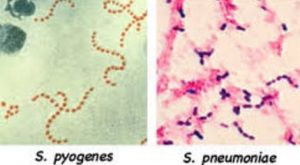
Common characteristics shared by these gram-positive cocci are:
- Nonmotile,
- Non-sporing,
- Facultative anaerobes
Some of the major differences between Staphylococcusand Streptococcus are summarized in the table below.
References
- Causey W. A. (1979). Staphylococcal and streptococcal infections of the skin. Primary care, 6(1), 127–139.
- Kherabi, Y., Zeller, V., Kerroumi, Y., Meyssonnier, V., Heym, B., Lidove, O., & Marmor, S. (2022). Streptococcal and Staphylococcus aureus prosthetic joint infections: are they really different?. BMC infectious diseases, 22(1), 555. https://doi.org/10.1186/s12879-022-07532-x
- Moreillon, P., Que, Y. A., & Bayer, A. S. (2002). Pathogenesis of streptococcal and staphylococcal endocarditis. Infectious disease clinics of North America, 16(2), 297–318. https://doi.org/10.1016/s0891-5520(01)00009-5
- Madigan Michael T, Bender, Kelly S, Buckley, Daniel H, Sattley, W. Matthew, & Stahl, David A. (2018). Brock Biology of Microorganisms (15th Edition). Pearson.
Related Posts
Martin Lewis Agar: Principle, Composition, and Uses
•Ashma Shrestha•bacteriology
Extremophiles: Their Types and Applications
•Ashma Shrestha•bacteriology
Fermented Foods: Types, Examples, and Health Benefits
•Aastha Shrestha•bacteriology
Prebiotics: Mechanisms, Sources, and Examples
•Aastha Shrestha•bacteriology