
Beneficial Microorganisms and Their Use
Beneficial Microorganisms and Their Use
Most naturally occurring microorganisms benefit humans. Throughout history, humans have used microorganisms for making food and medicine. The use of microorganisms in making bread, cheese, and wine is as old as human civilization.
Microorganisms form essential links in many food chains that produce plants and animals humans eat. Microorganisms living in the digestive tracts of animals and humans aid in the digestive processes. Humans occasionally eat microbes such as algae and fungi (mushrooms).
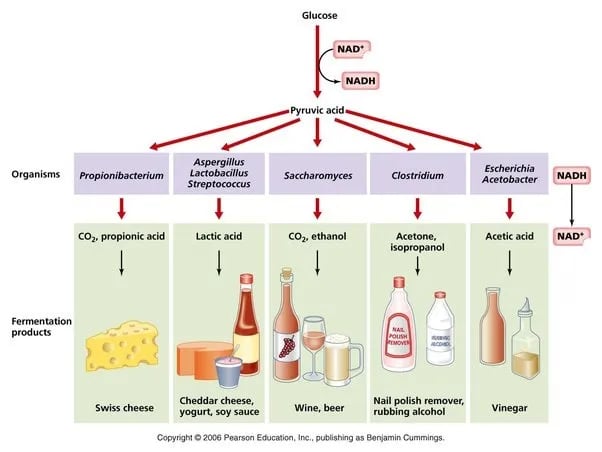 Figure: Use of microorganisms to produce different products
Biochemical and fermentation reactions carried out by microbes are used to produce products for promoting health (such as amino acids, hormones, probiotics, antibiotics), etc. or producing beneficial metabolites (such as enzymes, pickles, fructose used in soft drinks, artificial sweeteners, beer, wine, alcohols).
Today, hundreds of different substances are manufactured with the aid of microorganisms, and this post contains the most common use of such beneficial microorganisms.
Food Supplements
Yeasts are an excellent source of protein and vitamins and are used as supplements in processed foods, mainly in animal feeds. Algal cultures such as Scenedesmus and Chlorellahave been cultivated in various countries and used as ingredients in ice cream.
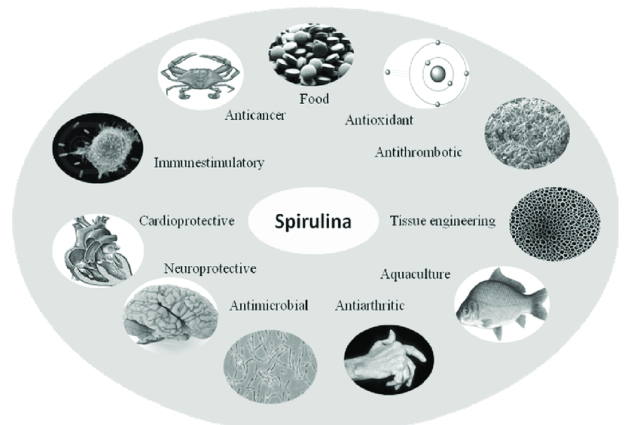 Figure: Food and Pharmaceutical applications of Spirulina (Image source)
Single-cell protein (SCP) is an important, high-yield, relatively inexpensive source of protein-rich food used in animal feed. Cyanobacterium Spirulina is a good source of protein, and dried Spirulina is about 65% protein. The cyanobacteria are harvested, sun-dried, washed to remove sand and made into cakes for human consumption.
Fermented Dairy Products
Microorganisms produce fermented dairy products, such as cultured buttermilk, yogurt, kefir, cheese, koumiss, etc. Fermented dairy products are a source of probiotics, prebiotics, and bioactive compounds. Dairy products can be used as nutraceutical agents and functional foods.
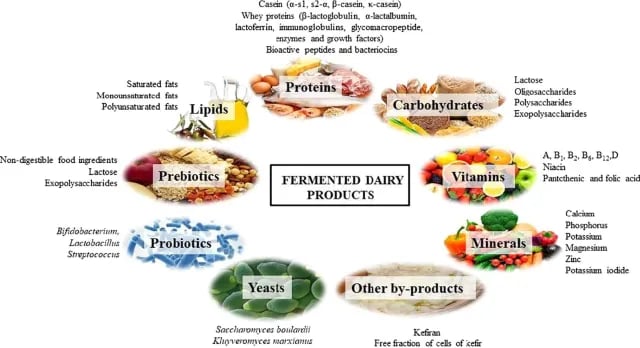 Figure: Fermented dairy products and their use
The most common strains of lactic acid bacteria (LAB) used for fermentation of milk are Streptococcus thermophilus, usually in association with Bifidobacteria or Lactobacilli. For example, yogurt is made by adding Streptococcus thermophilus and Lactobacillus bulgaricus into milk. Acidophilus milk, one of the fermented milk beverages, is made by adding Lactobacillus acidophilus to sterile milk. Bulgarian milk is made by adding L. bulgaricus.
Fermented Food Products
Microorganisms produce various fermented foods and products such as vinegar, sauerkraut, pickles, olives, poi, soy sauce, soy products, and fermented meats.
| Fermented Food Products | Fermenting Microorganism (s) |
|---|---|
| Vinegar | Acetobacter aceti |
| Sauerkraut | Bacteria naturally present in cabbage ( Lactobacillus and Leuconostoc play a major role) |
| Pickles | Naturally present bacteria ( Leuconostoc mesenteroides and Pediococcus plays a major role) |
| Olives | Leuconostoc mesenteroides and Lactobacillus plantarum |
| Poi | Pediococcus soyae, Saccharomyces rouxii and Torulopsis species. |
| Fermented meats | Lactobacillus plantarum and Pediococcus cerevisiae |
Bread Production
Yeast (a particular Saccharomyces cerevisiae strain) is used as a leavening agent in the bakery industry for making bread. During fermentation, yeast cells produce little alcohol and much carbon dioxide.
As the carbon dioxide bubbles become trapped in the dough, they cause the dough to increase in bulk and acquire a lighter, finer texture. When the dough is baked, the alcohol and carbon dioxide is driven off, and the bread becomes soft and porous because of spaces created by carbon dioxide bubbles.
Beer, Wine, and Spirits Production
Alcoholic beverages such as beer and wine are made by fermenting sugary juices. Spirits, such as whiskey, rum, and gin, are made by fermenting and distilling the fermented products. Specific strains of the yeast Saccharomyces are used as fermenters to produce alcoholic beverages.
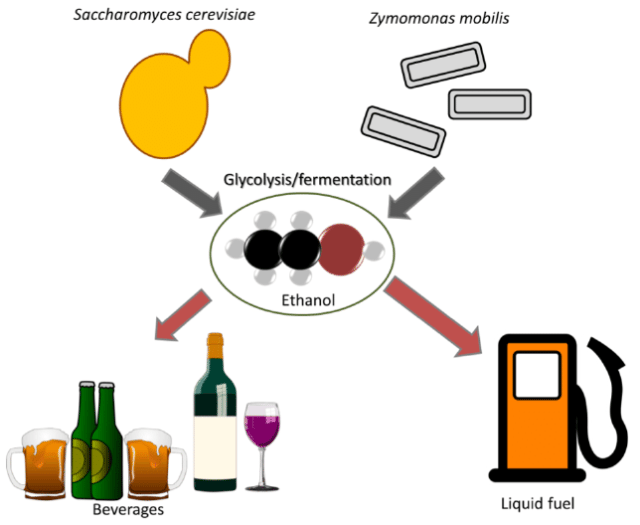 Figure: Role of microorganisms in producing alcoholic beverages (image source; Ref-5)
Cereal grains (usually malted barley) are used to make beer. Most wine is made from grape juice, although wine can be made from any fruit juice. Spirits are made from the fermentation of a variety of foods, mainly malted barley (Scotch whiskey), corn (bourbon), potatoes (vodka), wine or fruit juice (brandy), rye (rye whiskey, gin), and molasses (rum).
Biofertilizers and Biopesticides
Many microorganisms, such as fungi or bacteria, are useful in agriculture since they are attractive eco-friendly alternatives to mineral fertilizers and chemical pesticides. We have seen increased applications of biofertilizers and biopesticides in recent years, mostly owing to their eco-friendly benefits. These microbes supply nutrients to crops, control phytopathogens, and stimulate plant growth.
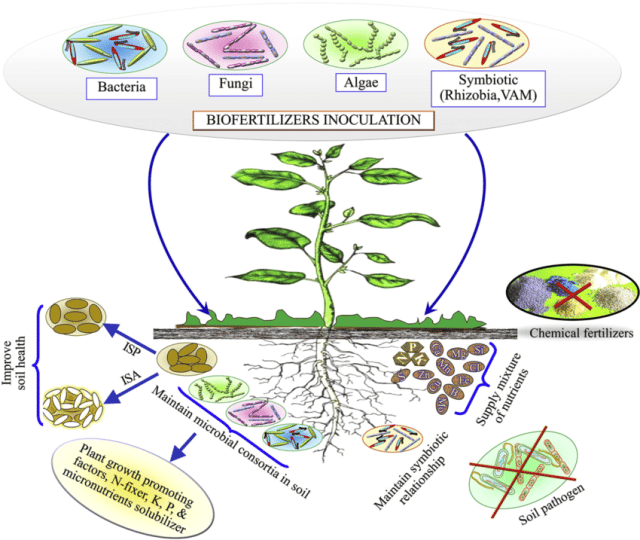 Figure: Influence of biofertilizers on plant growth (Image source: Ref-3)
Rhizobium, Azospirillum, Azotobacter, arbuscular mycorrhiza fungi (AMF),Azolla, and Cyanobacteria are used as biofertilizers. These bacteria or fungi promote plant growth by nitrogen-fixing, phosphate solubilization, or secreting plant growth-promoting substances.
Bacillus is one of the most employed bacteria in agriculture, both as biofertilizers and biopesticides. Bacillus thuringiensis is one of the most used biopesticides worldwide.
Probiotics
They are live beneficial microorganisms (bacteria and/or yeasts). Probiotics have been used as disease control agents or as feed/food supplements. Probiotic strains are known living bacteria that are safe for the intended use and are available at an efficacious dose throughout their shelf life.
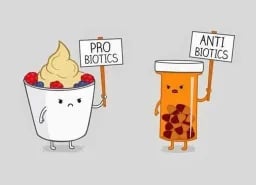 Figure: Probiotics and antibiotics
Read more about probiotics, prebiotics, and their health benefits.
Organic Acids and Solvent Production
Genetically engineered microorganisms can be used to manufacture organic acids and solvents. The acids include acetic, lactic, and citric acids. The solvents include ethanol (ethyl alcohol), butanol, acetone, and glycerol.
Ethanol for industrial application is produced the same way as making alcoholic beverages. Newer methods of ethanol production by using thermophilic clostridia, Zymomonas mobilis, and Pachysolen tannophilus are under the trial phase.
Clostridium acetobutylicum and C. saccharoacetobutylicum are used to produce acetic acid and butanol. The oxidation of ethanol by acetic acid bacteria produces vinegar (acetic acid). Aspergillus niger is used for the production of citric acid.
Antibiotics Production
Various microorganisms are used in industries to produce antibiotics. For example, genetically engineered strains of Penicillum chrysogenum are used to produce penicillin.
To combat drug resistance and to increase the potency of antibiotics. Pharmaceutical industries produce semi-synthetic antibiotics, made partly by microorganisms and partly by chemists.
Enzymes Production
Microorganisms are being used to synthesize enzymes used in industrial processes. Enzymes such as proteases, amylases, lipase, lactase, and invertase are produced using specific organisms.
| Name of the enzyme | Producing organism | Industrial application |
|---|---|---|
| Proteases (degrade proteins) | Aspergillus and Bacillus | Additives in detergents to increase cleaning power. |
| Amylase (degrade starch into sugars) | Aspergillus | Preparation of digestive aids, production of cakes, fruit juices, and starch syrups |
| Lipase | Saccharomycopsis | Applications in food, detergent, pharmaceutical, leather, etc. industries |
| Lactase | Trichoderma and Kluyvermyces | To develop lactose-free products for lactose-intolerant people |
| Invertase (glucose isomerase) | Saccharomyces | As a sweetener in many processed foods |
These enzymes have huge industrial applications and are also used in households; for example, proteolytic enzymes and lipase are essential components of drain cleaners.
Amino Acid Production
Humans and animals cannot synthesize eight essential amino acids, so they must be provided in the diet. Many essential amino acids such as lysine, glutamic acid, phenylalanine, aspartic acid, and tryptophan are manufactured by microbial fermentation.
Mutant strains of Corynebacterium glutamicum are used to produce lysine, which is used as animal feed supplements. Mutant strains of C. glutamicum are also used to produce glutamic acid. Glutamic acid is used to make flavor enhancer monosodium glutamate (MSG).
Vaccine and Hormone Production
Microorganisms are the major tools of genetic engineering. Several products important to humans, such as interferons, vaccines, vitamins, and hormones, are now produced economically by microbes because of genetic engineering.
Hormones such as insulin, human growth hormone, and somatostatin are made using modified strains of Escherichia coli made using **recombinant DNA technology.**Steroid hormones such as cortisone are produced using microorganisms through bioconversion using a mold Rhizopus nigricans.
Bacteriophage Therapy
Bacteriophages are the natural enemies of bacteria but are harmless to animals, plants, and humans. Phage therapy mainly utilizes obligately lytic phages to kill their respective bacterial hosts while leaving human cells intact and reducing the broader impact on commensal bacteria that often results from antibiotic use.
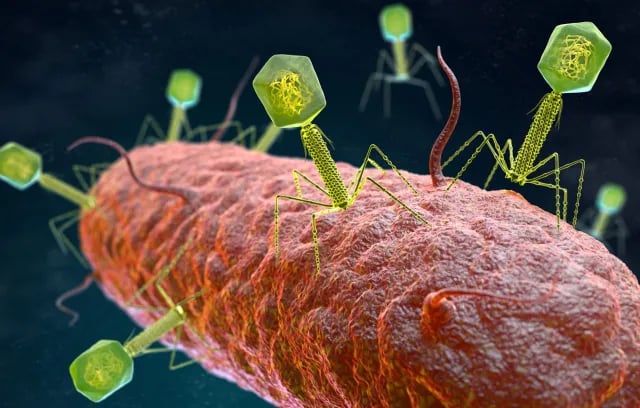 Figure: Phage therapy
Using highly specific phages, humans are selectively targeting MDR pathogens to treat various infections caused by them. Various clinical phage trials are ongoing to evaluable phage as therapeutic options to kill three critical priority pathogens, Acinetobacter baumannii, Pseudomonas aeruginosa, and members of the family Enterobacteriaceae.
Bioremediation
Bioremediation is a process where biological organisms are used to remove or neutralize an environmental pollutant by metabolic process. For example, certain strains of Pseudomonas can act as bioremediators to clean oil spills. The EXOON Valdez cleanup was a successful bioremediation story. Geobacter metallireducens can transform uranium into an insoluble precipitate and thus can be used to remove uranium from contaminated soil and water.
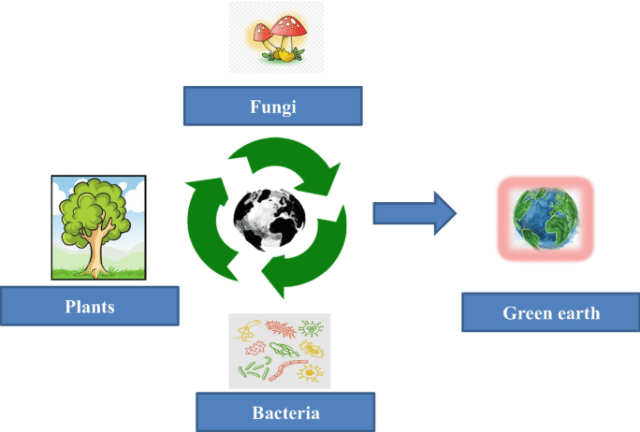 Figure: Bioremediation (Source:nature)
Microorganisms have the potential to be the major tools for waste management. Various organisms (fungi, algae, and bacteria) are being used to degrade oil spills, remove toxic materials from soil, and digest explosives that are too dangerous to handle.
Microbial Mining
Biomining, using microbes to extract metals of economic interest from less concentrated ores, is a new approach in mining industries. As the ore is getting less concentrated, few mining companies are using microorganisms in their mining process.
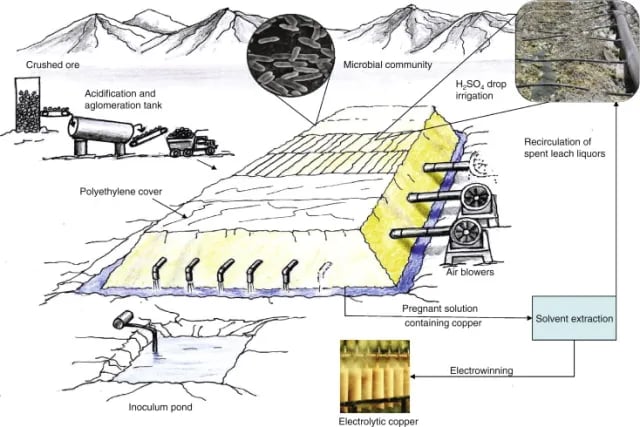 Figure: Biomining: heap bioleaching process to obtain copper on an industrial scale (source).
Thiobacillus ferroxidans, a chemolithotrophic acidophilic bacterium, converts copper into a water-soluble form that can be extracted. Other bacteria used in mining are Thiobacillus thioxidans, Leptospirillum ferroxidans, Thiobacillus organoparus, etc.
References and further readings
- Furfaro LL, Payne MS and Chang BJ (2018) Bacteriophage Therapy: Clinical Trials and Regulatory Hurdles. Front. Cell. Infect. Microbiol. 8:376. doi: 10.3389/fcimb.2018.00376
- Madigan, M. T., Martinko, J. M., Stahl, D. A., & Clark, D. P. (2011). BROCK Biology of Microorganisms (13th edition). Benjamin Cumming.
- Aliyu Ahmad Mahmud, Sudhir K. Upadhyay, Abhishek K. Srivastava, Ali Asger Bhojiya, Biofertilizers: A Nexus between soil fertility and crop productivity under abiotic stress, Current Research in Environmental Sustainability, Volume 3,2021, 100063, ISSN 2666-0490, https://doi.org/10.1016/j.crsust.2021.100063. https://www.sciencedirect.com/science/article/pii/S2666049021000396)
- Patel, Seema and Arun Goyal. “Current and Prospective Insights on Food and Pharmaceutical Applications of Spirulina.” Current Trends in Biotechnology and Pharmacy 7 (2013): 681-695.
- Macedo, Nicholas J. and Christopher J. Brigham. “From beverages to biofuels: the journeys of ethanol-producing microorganisms.” International Journal of Biotechnology for Wellness Industries 3 (2014): 79-87.

Tankeshwar Acharya, MSc (Medical Microbiology)
Tankeshwar Acharya is an Assistant Professor in the Department of Microbiology at Patan Academy of Health Sciences (PAHS), Nepal, where he has been teaching and practicing clinical microbiology for over 14 years. He is the founder of Microbe Online, one of the leading free microbiology education resources on the web, covering bacteriology, mycology, parasitology, immunology, and clinical laboratory diagnostics written from direct experience in both the classroom and the diagnostic laboratory.