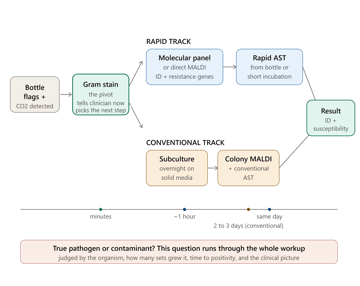
A Gram stain result comes back from the lab: Gram-positive cocci in clusters. Before you order the antibiotic, you need to know whether that is Staphylococcus aureus or a coagulase-negative contaminant. That single question determines treatment, prognosis, and whether the patient goes home or to the ICU.
Bacteriology is the study of bacteria: their structure, growth, identification, and the diseases they cause. It is the backbone of clinical microbiology, and the category with the most direct impact on patient care.
This section covers:
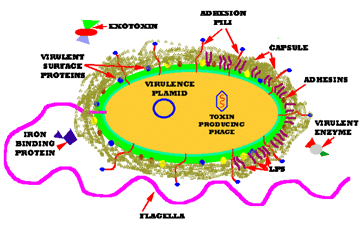
- Organism profiles: morphology, staining, culture characteristics, virulence factors, and clinical disease for all major pathogens (Staphylococcus, Streptococcus, Enterobacteriaceae, Pseudomonas, Mycobacterium, anaerobes, and more)
- Laboratory identification: the step-by-step diagnostic logic used to move from a specimen to a confirmed species
- Differentiation articles: side-by-side comparisons of organisms that students routinely confuse (e.g., S. aureus vs. S. epidermidis, E. coli vs. Klebsiella)
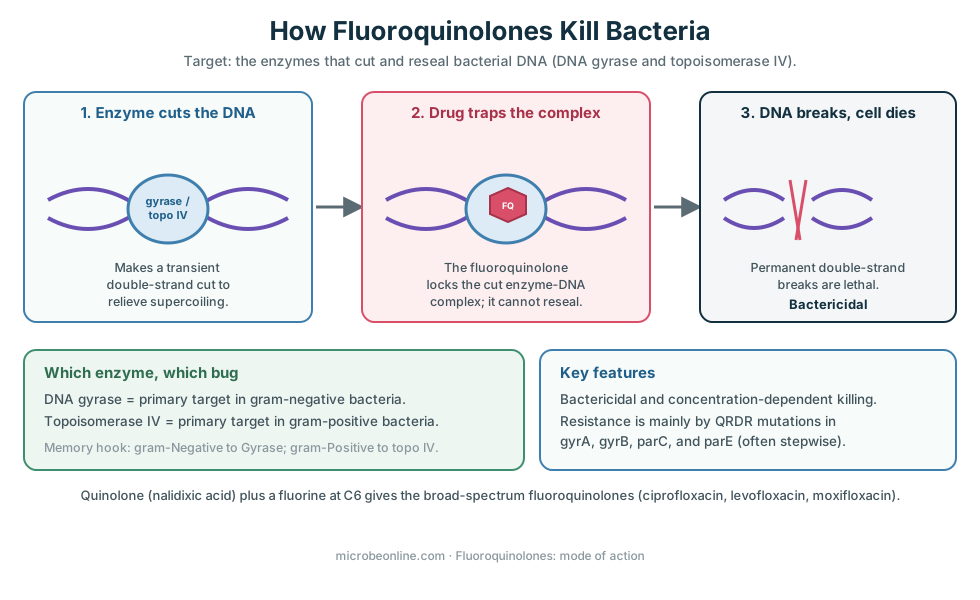
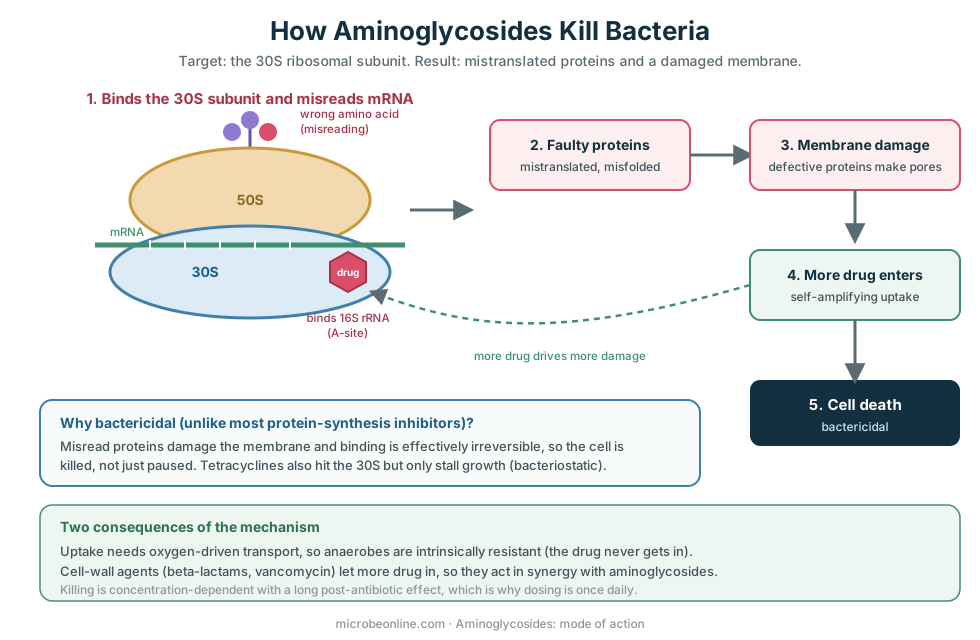
- Antimicrobial susceptibility testing: the methods, interpretation, and clinical relevance of MIC, disk diffusion, and resistance mechanisms
Whether you are preparing for MBBS exams, a laboratory science board, or clinical posting, every article is written to answer three questions: What is this organism? Why does it matter clinically? How will you remember it when it appears on an exam or a culture report?